
Every Iowa flip that goes sideways almost always traces back to the same decision: who you hired to swing the hammer. Learning how to vet a contractor before you sign anything is the one skill that decides whether your rehab budget holds or blows up two weeks into demo. I do not sign with anyone until they clear a real screening process, not a handshake and a good feeling. Here is exactly how I vet a contractor on my own Iowa flips: what I ask on the first call, how I confirm license and insurance, what a job-site walkthrough actually tells me, and the red flags that make me walk before I have spent a dollar. Get this right before the first draw goes out, and the rest of the rehab gets a lot more predictable.
How to Vet a Contractor Before You Ever Meet in Person
I never meet a contractor at the property until we have had one real phone call first. That call tells me more than a glossy estimate ever will. Learning how to vet a contractor starts with how someone talks about their work, not just their price.
- How many active jobs are you running right now? Six projects means less attention for mine than two does.
- What does a typical week look like on a job this size? Vague answers here usually mean a vague schedule later.
- Do you run your own crew or bring in subs for plumbing, electrical, and HVAC? I want to know who is actually doing the work.
- How do you handle a surprise, like old wiring behind a wall that was not in the scope? The answer tells me whether change orders will be a conversation or an ambush.
Confirm License and Insurance Directly, Not on Their Word
If I am still interested after that call, the next step is verification, not trust. I confirm registration and insurance directly instead of taking a contractor’s word for it. I ask for a certificate of insurance sent to me straight from their carrier, covering general liability and workers compensation if they run employees. A contractor who hesitates here, or who only has insurance for themselves and not the crew on site, is telling me something before we have spent a dollar together.
What a Job-Site Walkthrough Tells You That an Interview Can’t
Before any deposit changes hands, I ask to walk an active job. Watching how a crew treats someone else’s house mid-rehab tells me more than any interview answer. Are tools organized or scattered? Is the site swept at the end of the day, or does trash pile up in the yard? Is there a schedule posted anywhere, or does the crew look like it is improvising room by room? A contractor who runs a tight active site almost always runs a tight one on your flip too.
The Reference Calls That Actually Matter
I call two or three recent clients, and I do not ask what went right. I ask what went wrong. Every contractor has a story from a hard job. I want to hear it from someone who lived through it before I am the one finding out firsthand.
- Did the finish date match what you were told, or did it slide, and by how much?
- How did change orders get handled? In writing with a number attached, or verbally after the fact?
- Would you hire this contractor again on your next project, and why or why not?
A Vetting Story from a Recent Johnston Flip
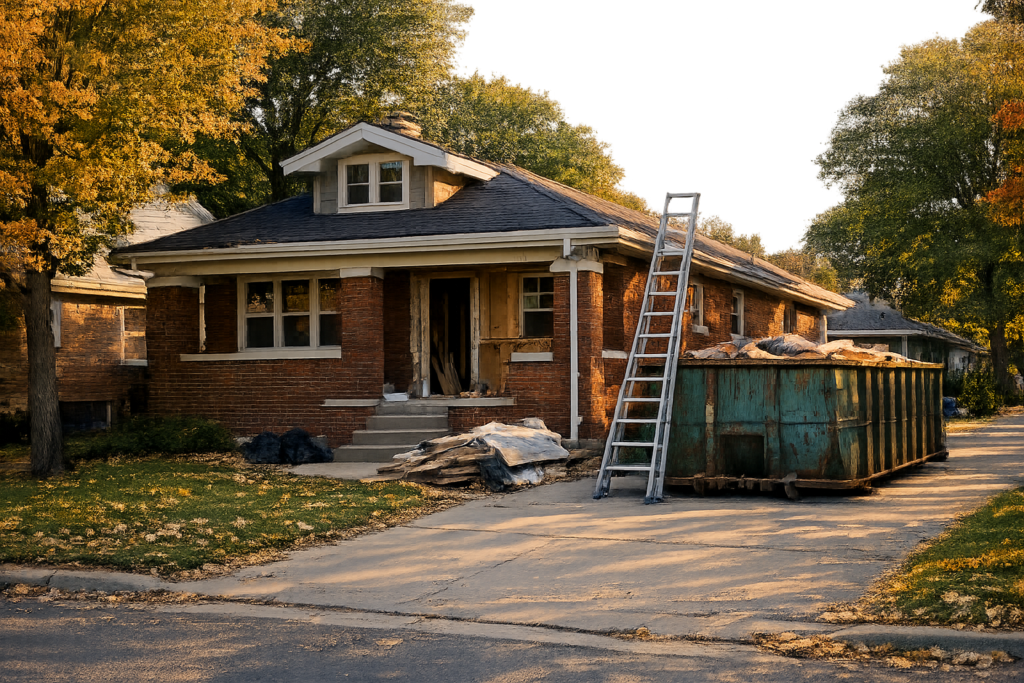
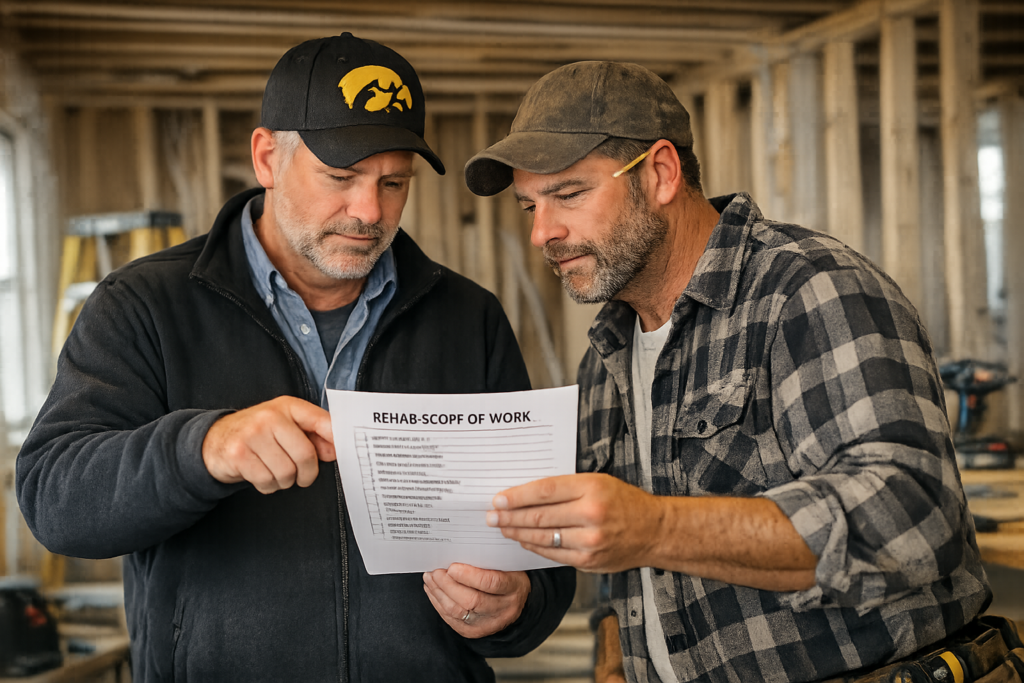
On a recent Johnston bungalow, I ran this exact process before signing anything. The screening call surfaced that the contractor was juggling three active jobs, which pushed me to ask harder questions about crew size and who would actually be on site day to day. The insurance certificate came straight from his carrier within a day, no delay, no excuses. A walkthrough of his current job showed a clean site with a schedule taped to the wall. Two reference calls both mentioned the same thing unprompted: he called them the day a problem showed up, not the week after. That pattern, more than the bid itself, is why I signed.
Red Flags That Mean You Walk During Vetting
Some patterns show up before a dollar ever moves, and they are worth taking seriously instead of explaining away.
- A price that changes materially between the phone call and the written bid, with no explanation for the gap.
- No current job you are allowed to visit or walk, for any reason.
- Reluctance to send an insurance certificate directly from the carrier, or insurance that only covers the owner and not the crew.
- A timeline that sounds faster than every other bid you have gotten, with nothing behind it that explains why.
- No local references, or references who cannot recall specific details about the job.
Any one of these alone might have an explanation. More than one together is how contractor cost overruns start, long before the first wall comes down.
What the Financing Actually Covers Once You’ve Picked the Right Contractor
The contractor you vet determines whether your rehab budget actually holds, and that number matters because of how Iowa fix and flip financing is structured. Little Guy Loans funds up to 90 percent of the purchase price and up to 100 percent of rehab costs, with the whole loan held to a maximum of 70 percent of the after-repair value. That 70 percent ARV cap is the controlling number on every deal, the ceiling everything else fits inside. Rehab funds release through a draw schedule, paid out in stages as completed work is verified, not handed over up front. A contractor who runs a disciplined site and communicates early keeps your rehab budget fix and flip math intact and your draws moving. One who does not can push your all-in cost past that 70 percent ceiling before you realize it is happening.
FAQ
What does it mean to vet a contractor before a flip?
Vetting a contractor is a screening process that checks a contractor’s license, insurance, current workload, and references before you sign anything, so problems surface during the interview instead of after the deposit is gone.
How many contractors should I talk to before hiring one?
A useful vetting process usually runs two to three contractors through the full screening call, license and insurance check, and reference calls, so you have something real to compare instead of judging one bid alone.
What is the biggest red flag when vetting a contractor?
A contractor who will not let you walk a current active job is one of the clearest red flags, because it usually means there is nothing on site you are meant to see.
Should I still vet a contractor I found through a referral?
A referral is a starting point, not a substitute for vetting. Confirm license and insurance directly, walk a current job, and make the reference calls even when a friend sent you the name.
Vetting a contractor is not a formality before the real work starts. It is the real work, the underwriting you do before your rehab budget is tested by a surprise behind a wall or a schedule that slips. Run the screening call, confirm license and insurance directly, walk an active job, and make the reference calls that ask what went wrong. Do that on every Iowa flip, and the contractor decision stops being the place where your margin quietly disappears.