Every full-time flipper in Iowa hits this fork eventually: keep general contracting the job yourself, or hand the whole rehab to a GC and buy back your time. I get asked about this more than almost anything else once an investor crosses five or six deals a year. GC your own flip or hire a GC isn’t a question with one right answer. It’s about what a specific deal, at your specific deal volume, actually needs. Self-GCing saves real money on markup. Hiring a GC saves the thing you can’t buy back once a season’s gone: time you could’ve spent sourcing the next deal. Here’s the cost-benefit breakdown I actually run before deciding either way.
GC Your Own Flip or Hire a GC: What the Decision Really Costs You
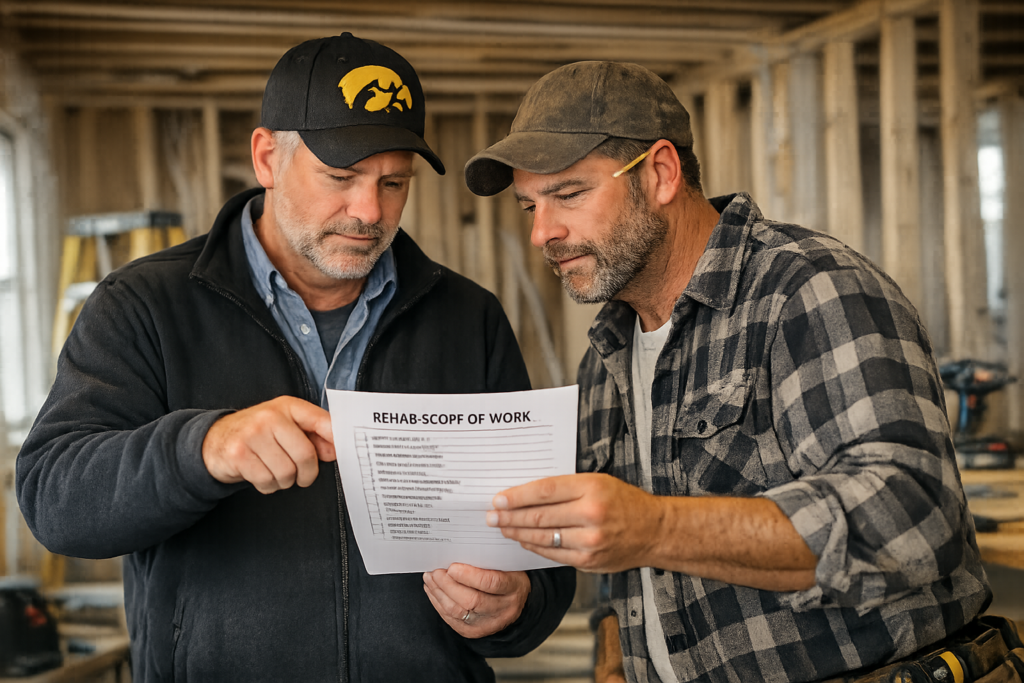
Self-GCing means you’re the one calling the electrician, scheduling the drywall crew, walking the site every day, and catching problems before they become change orders. A hired GC does all of that for a markup, usually 15% to 20% on top of labor and materials. On a $40,000 rehab, that’s $6,000 to $8,000 you either keep or hand off.
That number alone makes self-GCing look like the obvious move. It isn’t, not once you factor in what your time is actually worth and how many deals you’re trying to run at once.
What You Actually Save When You GC Your Own Flip
The savings are real, but they’re not just the markup. When you self-GC, you also control the sequencing. You can push a crew to start Monday instead of waiting for a GC’s schedule to open up. You can swap a sub who’s dragging without a conversation about contract terms. For an investor doing one or two deals a year, that control is worth more than the money.
- 15% to 20% GC markup stays in your pocket
- You set the schedule instead of waiting on someone else’s calendar
- You catch scope creep in real time, not in a weekly update
- You build direct relationships with subs you can reuse deal after deal
Those relationships compound. A plumber who trusts you to pay on time and stay off his back becomes a plumber who takes your call first, not last, when he’s booked out six weeks.
What You Give Up When You Skip the GC
Time, Measured in Deals, Not Hours
Self-GCing a rehab eats somewhere between five and fifteen hours a week, depending on the scope. That’s fine when you’re running one flip. It stops being fine at four or five running at once, because the hours don’t scale, they multiply. Every additional active rehab is another site to walk, another sub to chase, another material delivery to confirm.
Liability and Permit Exposure
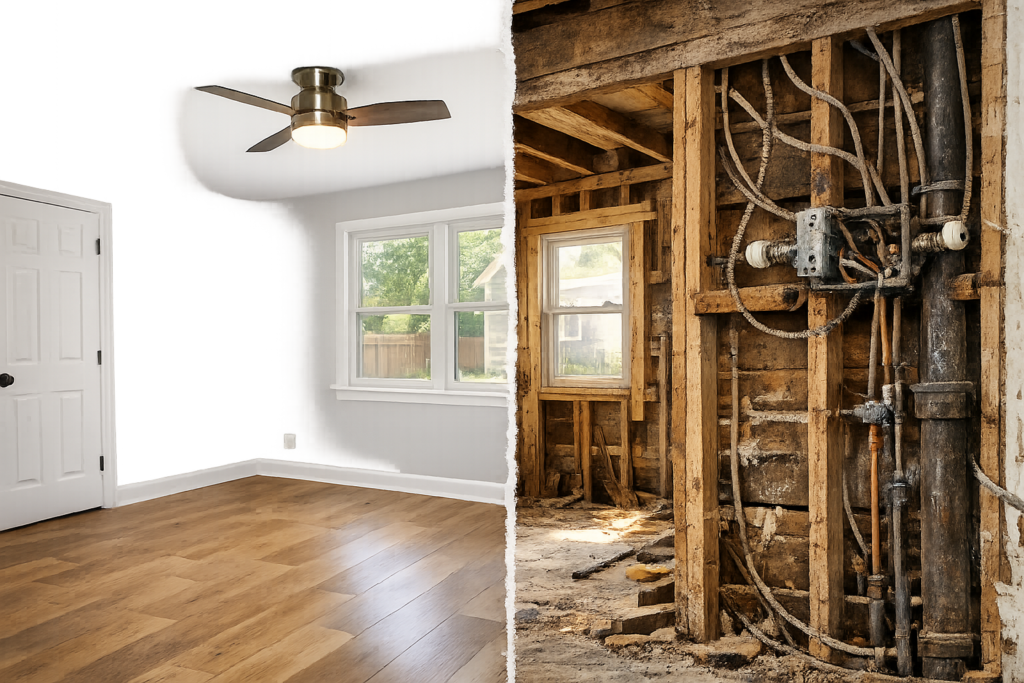
A licensed GC carries insurance and pulls permits under their own license in most Iowa jurisdictions. When you self-GC, that liability sits with you. A framing mistake, an unpermitted electrical panel swap, or a sub who walks off mid-job without insurance becomes your problem to fix and your name on the inspection file.
Momentum on the Next Deal
Every hour spent tracking down a no-show tile guy is an hour not spent underwriting the next off-market lead. If your bottleneck is deal flow, not rehab capacity, hiring a GC frees up the hours that actually grow the business.
The Math I Run Before I Decide
I don’t decide based on feel. I run three numbers on every deal before I pick a lane.
- What does the GC markup cost in dollars on this specific rehab budget?
- What’s my realistic hourly value right now, based on what I’d otherwise spend that time doing?
- How many other deals am I actively running, and does self-GCing this one delay the next acquisition?
If the markup is small relative to my time cost, or if I’ve got capacity to spare, I self-GC. If I’m juggling three rehabs and a deal is about to fall through because I haven’t called a seller back in four days, I hire the GC and eat the markup gladly.
A Norwalk Example: Same Budget, Two Different Calls
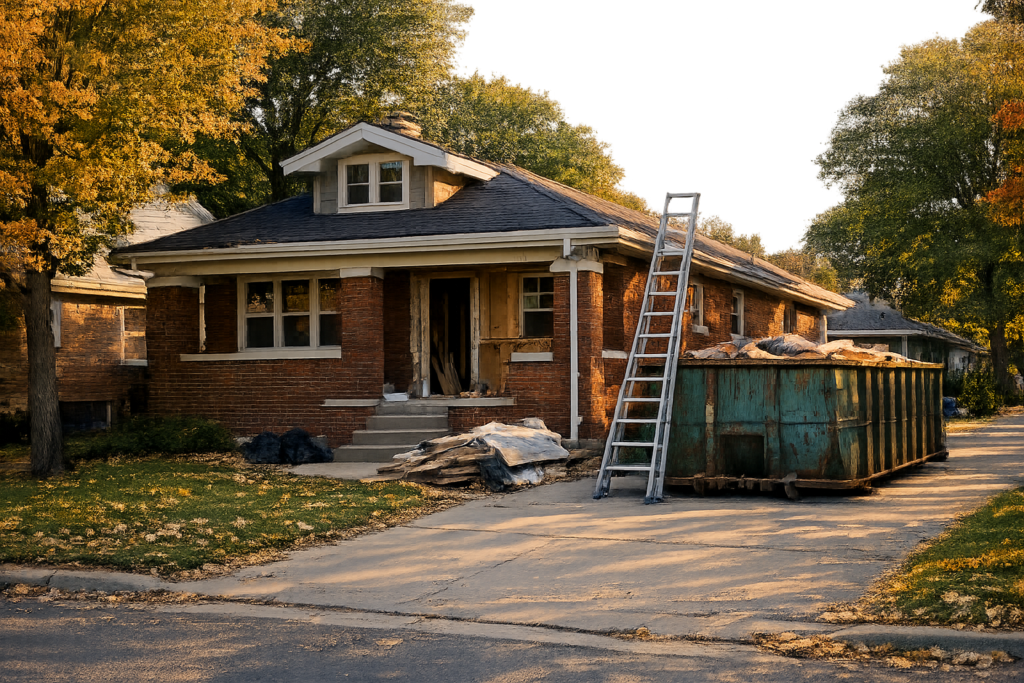
I worked with an investor last year on two rehabs in Norwalk, both mid-1990s ranch houses on the same street, both with rehab budgets around $35,000. On the first, he was between deals with time on his hands. He self-GC’d it, saved roughly $6,500 in markup, and the job ran six weeks with only minor delays.
Three months later he had two other flips going at once and picked up a third property two streets over with a nearly identical scope. He hired a GC for that one. The rehab cost him $6,000 more than self-GCing would have, but it freed up the hours he needed to close on a fourth deal that same month. Same rehab budget, same neighborhood, two different answers, because the deal volume around each decision was different.
Financing Either Way: The Numbers That Don’t Change
Whether you self-GC or hire a GC, the financing math on our loans stays the same. Borrowers can access up to 90% of the purchase price and up to 100% of rehab costs, with a maximum 70% of ARV controlling the total loan amount. That 70% ARV cap is the real ceiling on any rehab budget, so run your numbers against it before you commit to either path, not after the crew is already on site.
FAQ
Should I GC my own flip or hire a general contractor?
The right choice is a self-GC job when your deal volume is low enough that you have the hours to manage a site directly, and a hired GC when you’re running multiple rehabs at once and your time is better spent sourcing the next deal.
How much does a general contractor typically charge in markup?
A general contractor markup is a fee, usually 15% to 20% of total labor and material costs, that covers scheduling, supervision, and the licensing and insurance a GC carries on the job.
Is it legal to GC your own flip in Iowa?
Self-GCing your own investment property is generally permitted in most Iowa jurisdictions, though specific trades like electrical and plumbing still require licensed subcontractors and proper permits regardless of who manages the job.
How many flips can I run at once if I self-GC?
A realistic ceiling for most self-GC investors is one to two active rehabs at a time, since each project demands five to fifteen hours a week of direct oversight that competes with sourcing and underwriting the next deal.
GC your own flip or hire a GC isn’t a decision you make once and stick with forever. It’s a call you make deal by deal, based on the markup at stake, what your time is worth right now, and how many other rehabs are already pulling at your schedule. Run the three numbers, be honest about your capacity, and let the math tell you which lane makes sense for this specific deal. The investors who scale past a handful of flips a year are usually the ones who learned to hire out the work that doesn’t need their hands on it, and keep the work that does.