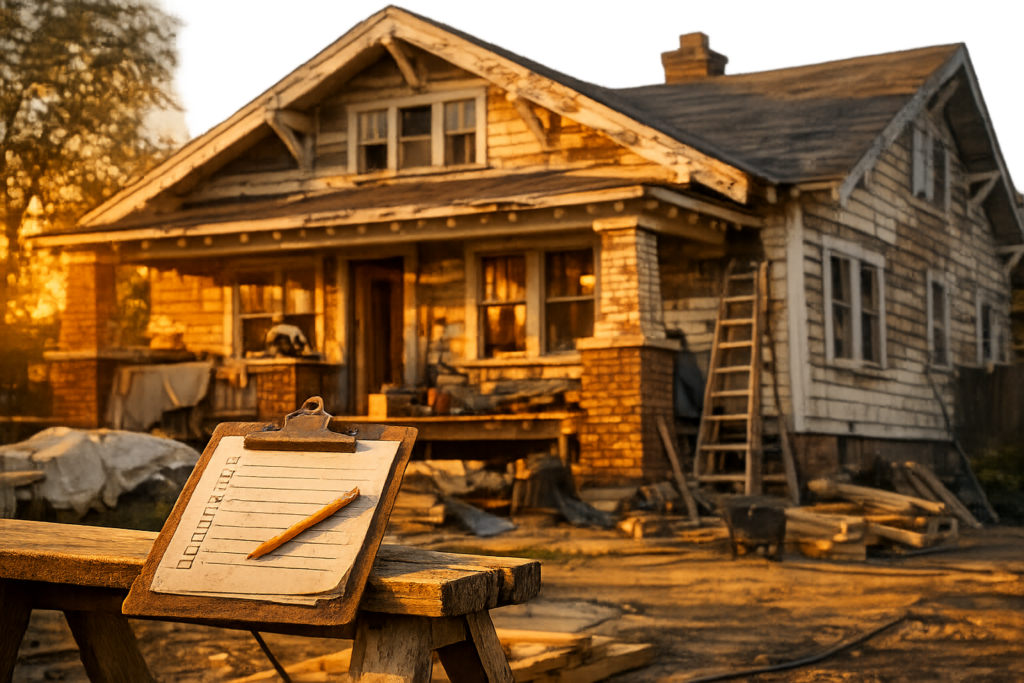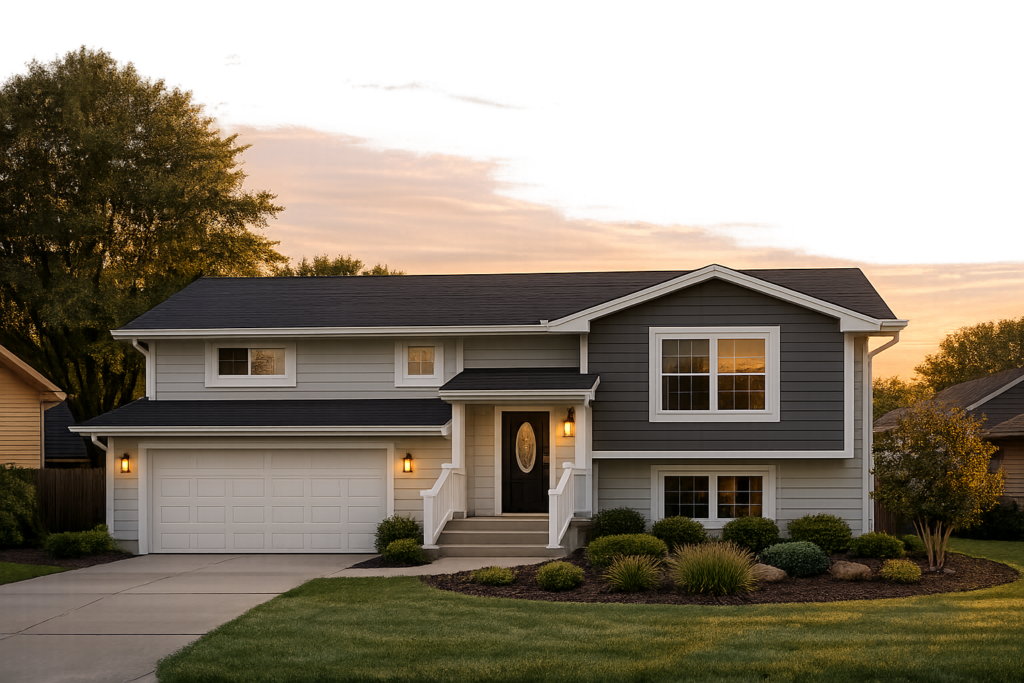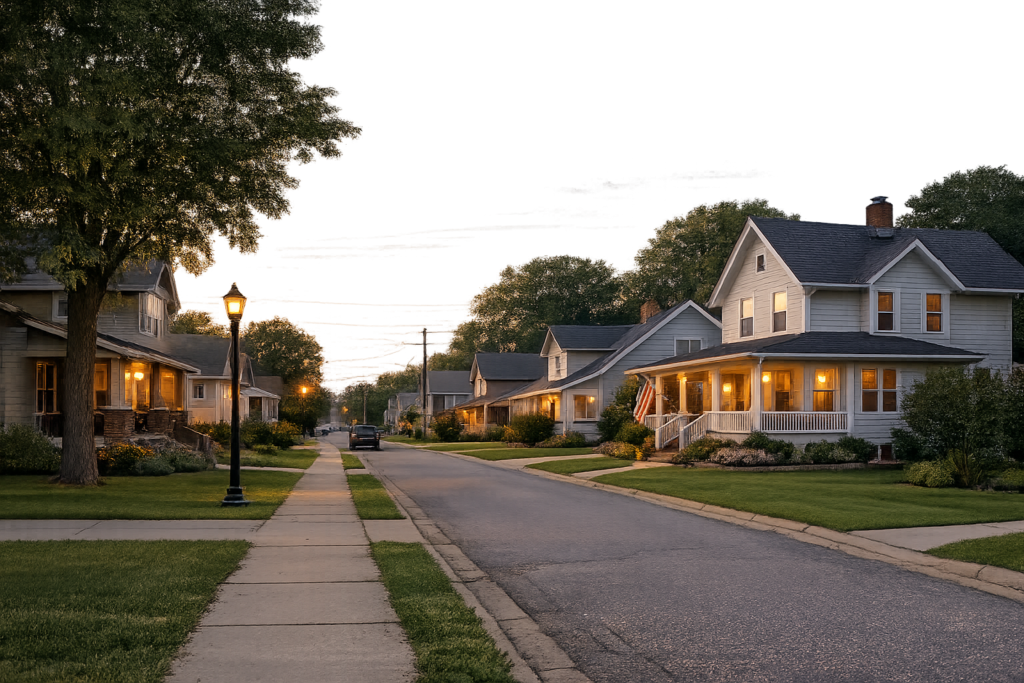
Every flip starts with the same fork in the road, before financing, before the crew shows up: is this a light rehab or a full rehab? Get it wrong and you either overspend on a house that only needed paint and flooring, or you underbudget a gut job and watch your margin disappear around week six. Light rehab vs full rehab isn’t about how much work sounds impressive. It’s about what the house actually needs and what the after repair value will support. Here’s the three-part check I run on scope, budget, and timeline before I ever write an offer on an Iowa flip.
Light Rehab vs. Full Rehab: What Actually Separates Them
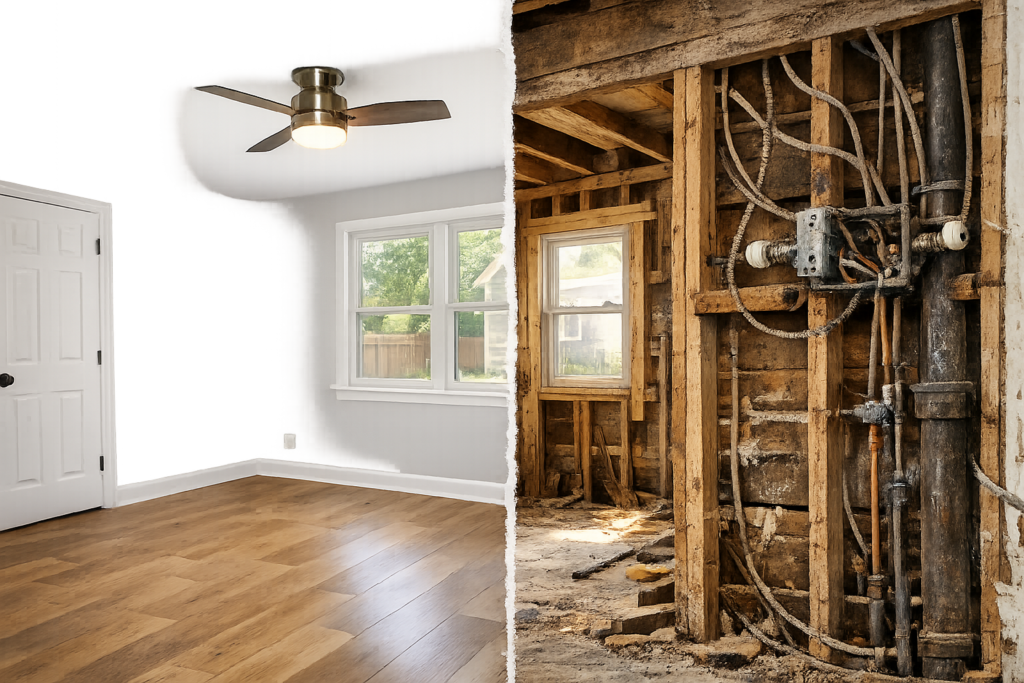
A light rehab touches the surface and the small stuff: paint, flooring, light fixtures, cabinet faces, a kitchen or bath refresh, landscaping, and maybe a furnace or water heater near the end of its life. A full rehab goes into the bones of the house.
- Roof replacement, not just a few shingles
- Electrical panel upgrade or a full rewire
- Plumbing stack replacement, not a fixture swap
- Foundation repair or structural framing work
- HVAC system replacement, ductwork included
- Layout changes that move walls or add square footage
If your scope of work only lists items from the first group, you’re looking at a light rehab. If it includes anything from the second group, budget and plan for a full rehab, even if most of the house looks fine on a walkthrough.
Why the Wrong Call Costs You Real Money
I’ve seen investors treat a full rehab like a light one because the kitchen looked updated and the paint was fresh. Then the inspector finds knob and tube wiring behind the walls, or a cast iron sewer line collapsing under the yard. That’s not a $12,000 surprise. That’s a $35,000 surprise, and it shows up after you’ve already closed.
The opposite mistake costs you too. Sinking full-rehab money into cosmetic upgrades a house didn’t need prices you out of the 70% rule before you’ve started. Either direction, the scope call protects your margin, not the purchase price.
How I Score a House Before I Decide the Scope
I run three checks on every property before I settle on light or full.
Age and Systems
Anything built before 1960 gets a hard look at wiring, plumbing, and the foundation, regardless of how the finishes look. A house from the 1990s or later with an updated kitchen is a much stronger light-rehab candidate.
Comps and the ARV Ceiling
I pull comps before I decide the scope, not after. If the top comp on the block caps out at $260,000 no matter how nice the finish level, a full rehab that pushes your all-in cost past that ceiling doesn’t make sense, even if the house needs it.
Timeline Tolerance
A light rehab can move in four to six weeks. A full rehab realistically runs twelve to sixteen. If you’re racing the fall market, that timeline difference should weigh on the scope decision as much as the repair list does.
A Beaverdale Example: Same Block, Two Different Scopes
I looked at two Beaverdale bungalows last year on the same street, both built in the 1940s, both listed within $8,000 of each other. The first had updated electrical from a 2018 remodel, a newer roof, and just needed flooring, paint, and a kitchen refresh. Light rehab, done in five weeks, budget under $30,000. The second still had the original knob and tube wiring, a failing cast iron stack, and a foundation crack needing engineering review. Same neighborhood, same era, a rehab budget nearly triple the first house. The finishes told two different stories the systems didn’t back up.
Matching Your Rehab Budget to the Right Loan Terms
Whatever scope you land on, the financing math works the same way. On our loans, borrowers can access up to 90% of the purchase price and up to 100% of rehab costs, with a maximum 70% of ARV controlling the total loan amount. That ARV cap is the real ceiling on any project, light or full, so run your rehab number honestly before you offer.
FAQ
What is a light rehab on a fix and flip?
A light rehab is a rehab scope that touches cosmetic and surface-level items, like paint, flooring, fixtures, and a kitchen or bath refresh, without replacing major systems such as the roof, electrical panel, plumbing stack, or foundation.
What is a full rehab on a fix and flip?
A full rehab is a rehab scope that replaces one or more major systems in a house, including the roof, electrical, plumbing, HVAC, or structural framing, in addition to cosmetic updates.
How do I know if my flip needs a light or full rehab?
A reliable read is a walkthrough that checks the age of the systems, not just the finishes, cross-referenced against comps to confirm the ARV supports the repair level the house actually needs.
Does a full rehab always cost more than a light rehab?
A full rehab is typically the more expensive scope because it includes major system replacement, but the real cost driver is how many systems need work, not the age of the house alone.
Light rehab vs full rehab isn’t a gut call, it’s a scope call, and it should happen before you write the offer, not after the crew opens the first wall. Check the systems against the finishes, pull comps to confirm the ARV supports the work, and be honest about your timeline tolerance. Get those three things right and the rehab budget takes care of itself, whether that budget is $28,000 or $95,000. The houses that hurt investors aren’t the full rehabs they planned for, they’re the light rehabs that turned out to be full rehabs three weeks in.