
Every flip I’ve ever regretted started with a comp I didn’t trust. I pulled three sales, none of them close enough, and talked myself into a number I wanted to see instead of the number the market was actually paying. Running comps in Des Moines is the single skill that separates a good offer from a bad one, and it has nothing to do with luck. It’s a repeatable process: pull recent sales, filter for real similarity, and adjust for the differences that matter. Do it right and you’ll know your after repair value before a contractor ever sets foot in the house. Skip it or rush it, and you’re guessing with someone else’s money on the line.
Running Comps in Des Moines Starts With the Right Radius
I don’t pull comps from across the metro and call it good. A comp half a mile away in a different school district or a different price band tells me almost nothing. My rule: stay inside a half-mile to one mile in an established neighborhood, and widen only if sales are thin. In a newer subdivision with dozens of similar houses, I can tighten that radius even further.
Time matters as much as distance. I want sales from the last three to six months. Anything older than that and I’m pricing a market that no longer exists, especially with how fast buyer demand has moved this year.
Filtering Comps That Actually Match Your Subject Property
Pulling five sales in the neighborhood is easy. Pulling five sales that actually match your subject property is the part most new investors skip. Before I trust a comp, I run it through the same filter every time:
- Similar square footage, generally within 10 to 15 percent
- Same bedroom and bathroom count, or close enough that the difference doesn’t change buyer behavior
- Comparable lot size and the same general age of construction
- Sold, not just listed or pending, so the price reflects what a buyer actually paid
If a comp fails two or more of those filters, I don’t force it into the average. I’d rather work with three solid comps than seven that are all slightly wrong in different directions.
Adjusting Comps for Condition, Not Just Square Footage
This is where most flip analysis breaks down. Two houses can be the same size on the same street and sell $40,000 apart because one had a finished basement and a two-year-old roof, and the other needed everything. When I run comps, I’m not just averaging sale prices. I’m asking what condition each comp sold in and adjusting my subject property’s after repair value up or down to match.
A renovated kitchen, updated mechanicals, and a finished lower level all push a comp’s price higher. I account for those differences line by line instead of letting one outlier comp drag my whole estimate off course.
A Beaverdale Example: Comps That Told Me the Truth
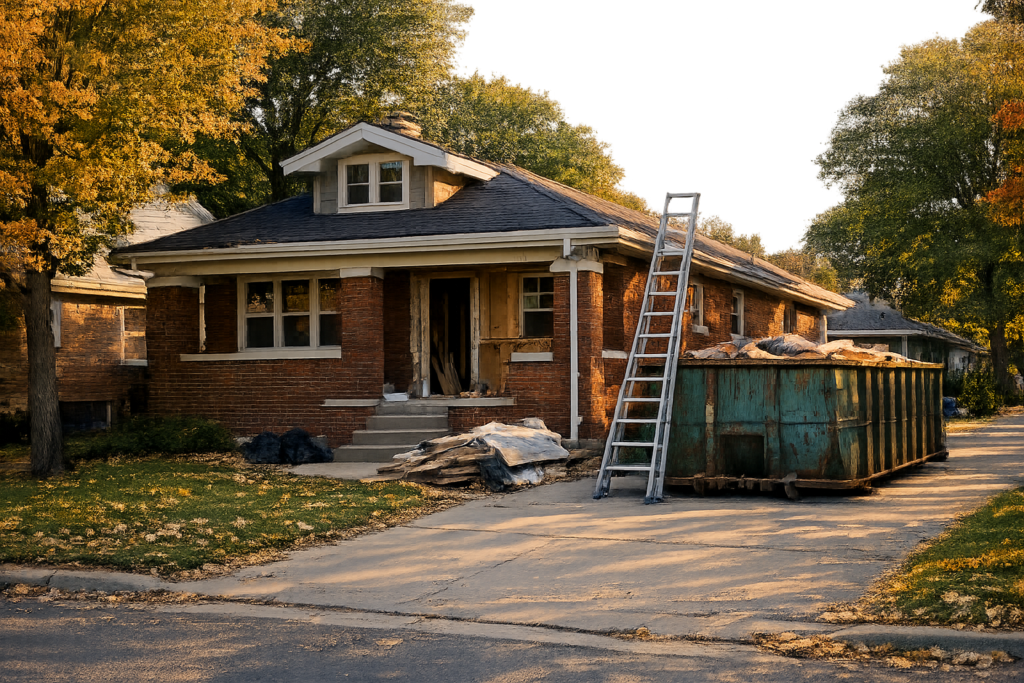
On a recent Beaverdale deal, the first three comps I pulled were all bungalows on the same block, sold within four months of each other. Two had updated kitchens and finished basements and sold in the low $300s. The third was original condition throughout and sold about $45,000 lower. My subject property was closer to that third comp’s starting condition, so I built my after repair value off a fully renovated number, then backed out the cost to get there.
Compare that to a deal in Waukee, where nearly every house on the street was built within the same five-year window. Comps there needed almost no condition adjustment. The lesson holds in both markets: know which kind of neighborhood you’re in before you trust the average.
Running Comps Through the 70% Rule
Once I have a defensible after repair value, I run it through the 70% rule to set my maximum offer. Take the ARV, multiply by 70%, then subtract the rehab budget. On a house with a $300,000 ARV and a $50,000 rehab, that puts the ceiling around $160,000. Comps set the ARV. The 70% rule turns that number into a real offer I can make with confidence, before a contractor ever walks the property.
FAQ
What does running comps mean on a fix and flip?
Running comps is the process of pulling recent, sold, similar properties near a subject house and using their sale prices, adjusted for condition and features, to estimate that house’s after repair value.
How many comps do I need for an accurate flip analysis?
Three to five solid comps, sold within the last three to six months and within a half-mile to one mile, are usually enough. More comps only help if they actually match; a large batch of weak comps is worse than a small batch of strong ones.
What is the difference between comps and ARV?
A comp is a single comparable sale used as a data point. ARV, or after repair value, is the estimated value of a subject property once renovated, built by weighing multiple comps together and adjusting for condition differences.
What Solid Comps Mean for Financing the Deal
Once comps give me a defensible ARV, the loan terms fall into place around it. Financing on a typical Iowa flip covers up to 90% of the purchase price and up to 100% of the rehab budget, with a maximum of 70% of ARV controlling the total loan amount. That ARV cap is exactly why the comp work has to come first. Get the after repair value wrong and every other number in the deal is wrong with it.
Running comps in Des Moines isn’t a box to check before you make an offer, it’s the foundation the entire deal sits on. Pull sales that actually match, adjust for condition instead of averaging blind, and run the result through the 70% rule before you get attached to a number. Whether you’re working a block of Beaverdale bungalows or a newer street in Waukee, the process stays the same: trust the comps that match, throw out the ones that don’t, and let the math tell you what to offer instead of your excitement about the house.