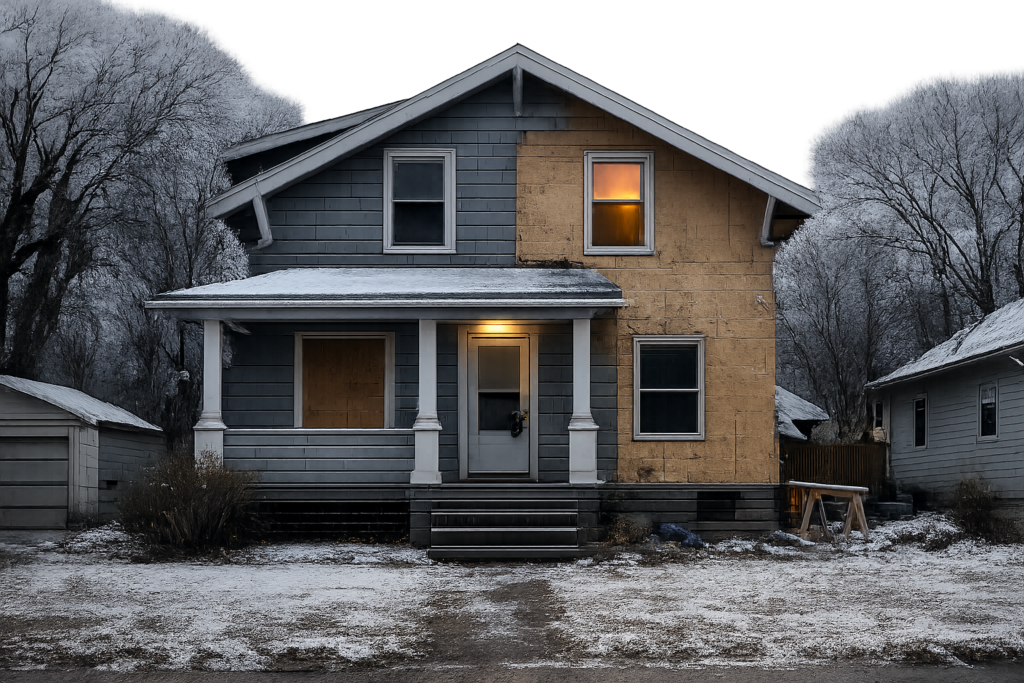
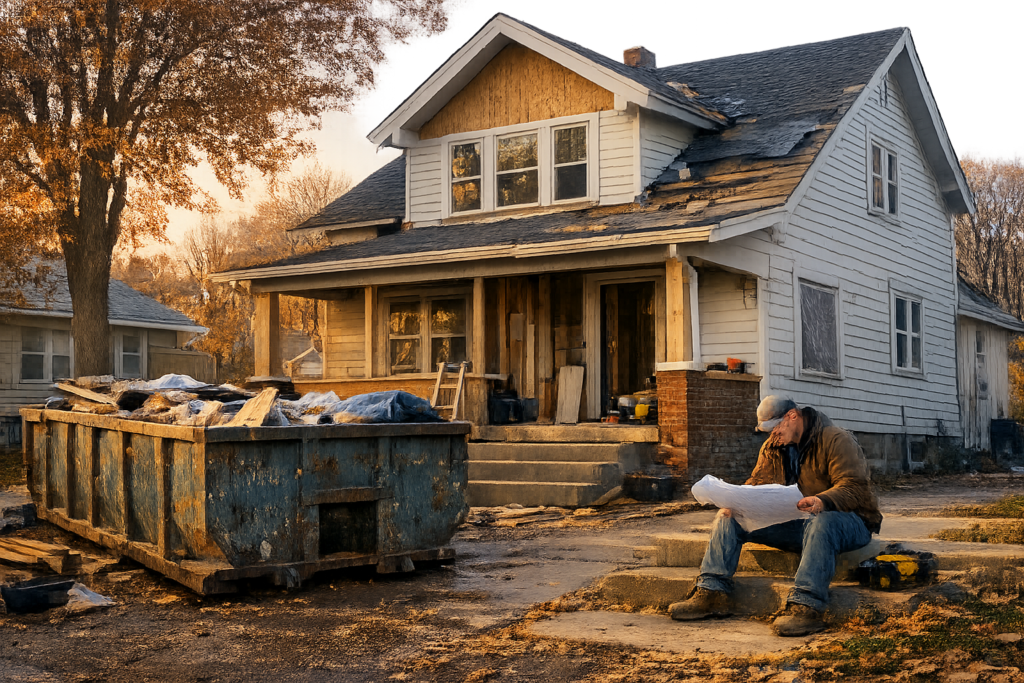
You found a deal that’s bigger than your usual: a house with a real rehab scope and a purchase price that stretches your cash. The lender covers most of it, but not all of it, and the gap is yours to fill. That’s where a private money hard money stack comes in. You use a hard money loan for the purchase and rehab, and a private money partner or lender for the cash the loan doesn’t cover. I run the math on that gap before I make an offer, because it decides whether the deal works at all. Here’s how the pieces fit together, where Iowa investors get tripped up, and what to tell every party up front.
What a Private Money Hard Money Stack Actually Is
A private money hard money stack is a funding plan that combines two sources of capital on one deal. The hard money lender funds the purchase and the rehab against the property. The private money source funds the rest of what you need to close and finish the project.
Private money usually comes from someone in your own network: a past business contact, a friend, a family member, or another investor who wants a fixed return on a note. It isn’t a bank product, so the terms are whatever you and that person agree to in writing.
The reason to stack is simple. A bigger deal needs more cash than most investors have sitting around, and a second source lets you do the deal without draining your reserves.
Run the Gap Before You Make the Offer
The gap is the difference between your total project cost and what the hard money loan will actually fund. Most investors guess at it. I calculate it, using three numbers:
- Total cost: purchase price plus rehab budget, before closing and holding costs.
- Loan amount: the lower of the purchase-plus-rehab percentages and the cap based on after-repair value (ARV).
- Gap: total cost minus the loan amount, plus closing costs, interest, and a contingency.
The ARV cap is the number that surprises people. A loan can cover most of the purchase and all of the rehab on paper, and still get cut back because the cap is lower. When that happens, the gap grows.
A Greenwood Park Example
Here’s a made-up deal in the Greenwood Park neighborhood of Des Moines. You can buy a house for $180,000. The rehab budget is $60,000. Your comps point to an ARV of $270,000.
On paper, 90% of the purchase is $162,000 and 100% of the rehab is $60,000, which adds up to $222,000. But 70% of the $270,000 ARV is $189,000, and that cap controls. So the loan is $189,000, not $222,000.
Your total cost is $240,000. Subtract the $189,000 loan and you have a $51,000 gap before closing costs, interest, and contingency. That’s the cash you need from your own pocket, from a private money source, or from some mix of the two.
Notice what happened. The deal looked like it needed little cash until the cap came into play. That’s exactly why I run the gap first.
What the Private Money Costs
Private money isn’t free, and the cost of the second source has to fit inside your margin. Say you borrow the $51,000 from a private lender at 8% interest for a six-month hold. Simple interest on that is about $2,040. If the lender also wants a fee for setting up the note, add that too.
Then check the full picture. Add the hard money interest, closing costs, taxes, insurance, utilities, and selling costs to the private money cost. If the profit that’s left is thin, the stack is too expensive for that deal.
I’d rather find that out on a spreadsheet before the offer than at the closing table after it.
Tell Your Lender How the Stack Is Built
This is the part people skip. Your hard money lender needs to know where your cash is coming from and how the private money is secured, if it’s secured at all. Some lenders won’t allow a second lien behind their loan. Others will, under certain conditions.
So ask early, and get the answer in writing before you promise your private lender anything. If your private money partner expects a lien on the property and your lender doesn’t allow one, you’ll have a problem on closing day.
Also talk to an attorney about how the private note is written. Raising money from other people has rules attached, and a handshake agreement doesn’t cover them.
Where Stacks Go Wrong
- The gap was estimated, not calculated, and the ARV cap cut the loan back at the last minute.
- The private money terms were verbal, and the two sides remembered them differently.
- The deal had no contingency, so a rehab overrun came out of nowhere.
- The private lender expected a lien position the hard money lender didn’t allow.
- The hold ran past the private note’s due date with no plan to extend it.
Every one of these is avoidable with an hour of planning and a written agreement.
How the Loan Terms Set the Gap
Your gap starts with your loan terms. The Little Guy Loans terms work like this:
- Up to 90% of the purchase price (loan-to-cost).
- Up to 100% of rehab costs.
- Maximum 70% of ARV, which is the controlling cap.
Run those three limits against your numbers, and the smallest result is your loan. Everything above it is the gap you need to fund.
FAQ
What is private money in real estate?
Private money is capital that an individual lends to an investor on a deal, usually secured by a note, with terms set directly between the two people instead of through a bank.
Can you use private money and hard money on the same deal?
A private money hard money stack is a funding plan that uses a hard money loan for the purchase and rehab and private money for the remaining cash. You need your hard money lender’s approval of the structure first, especially if the private lender wants a lien.
How do you calculate the funding gap on a flip?
A funding gap is the amount of cash a deal needs beyond the loan. Add the purchase price and rehab budget, subtract the loan amount allowed by the lender’s limits, then add closing costs, interest, and a contingency.
How much does private money cost?
The cost depends on the interest rate, the length of the hold, and any fees the two sides agree to. Put the full cost into your deal analysis before you make an offer.
The Takeaway
A bigger deal usually means a bigger gap, and the gap is where most plans fall apart. Calculate it before you offer, using the loan limits and the ARV cap, not a guess. Price the private money the same way you price everything else on the deal, and make sure your margin survives the cost. Tell your hard money lender how the stack is built before you promise anything to your private lender, and put every agreement in writing. Done right, a stack lets you take on a larger project without emptying your reserves. Done carelessly, it turns a good deal into a mess at the closing table.