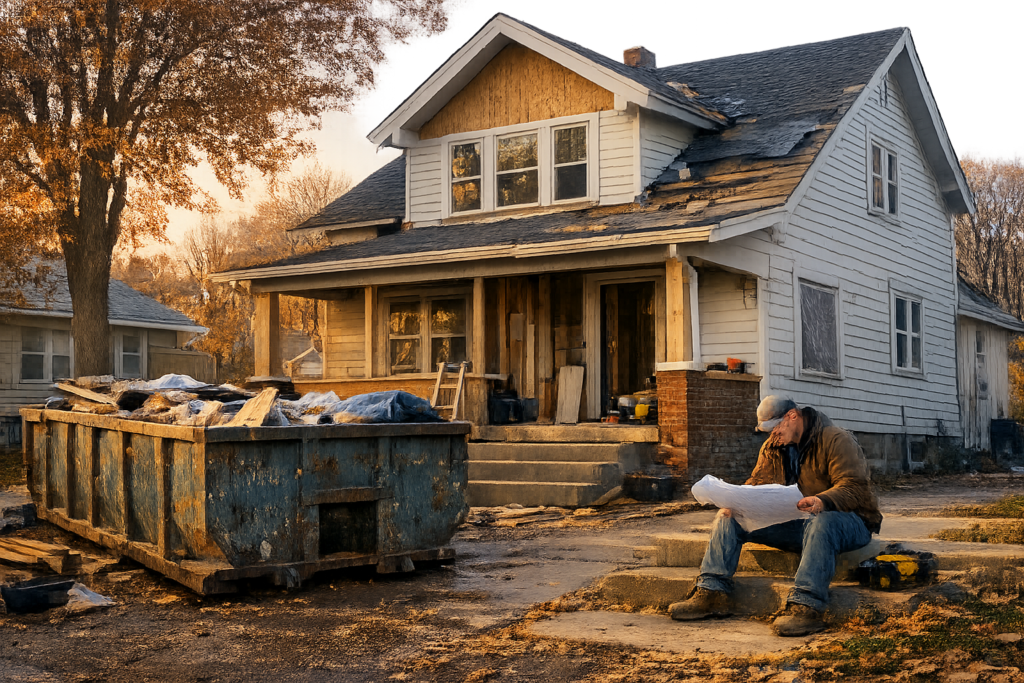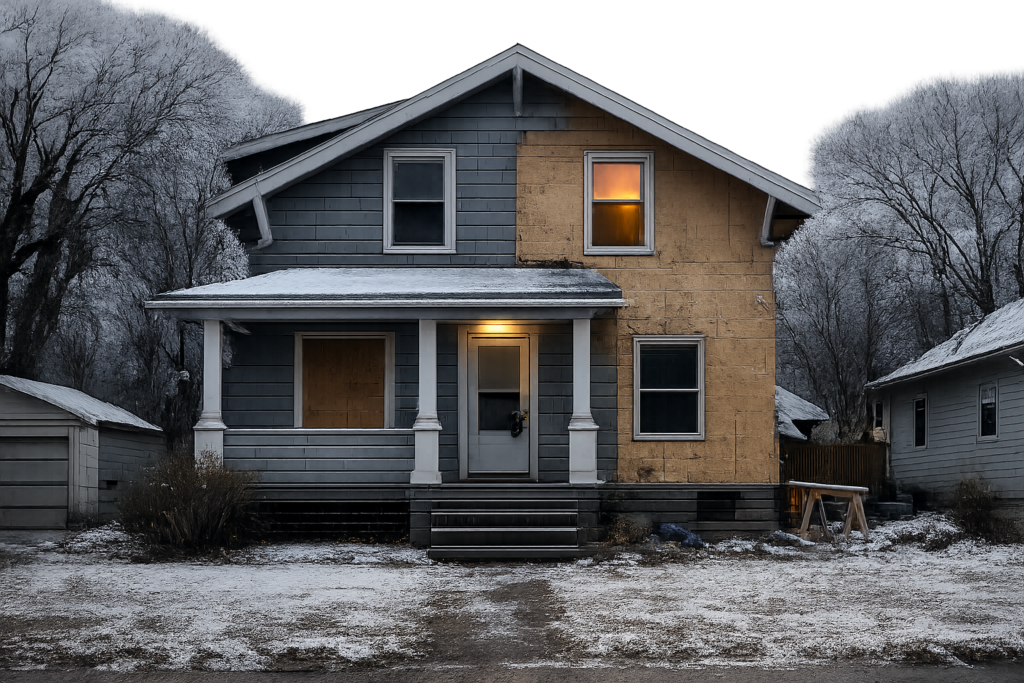
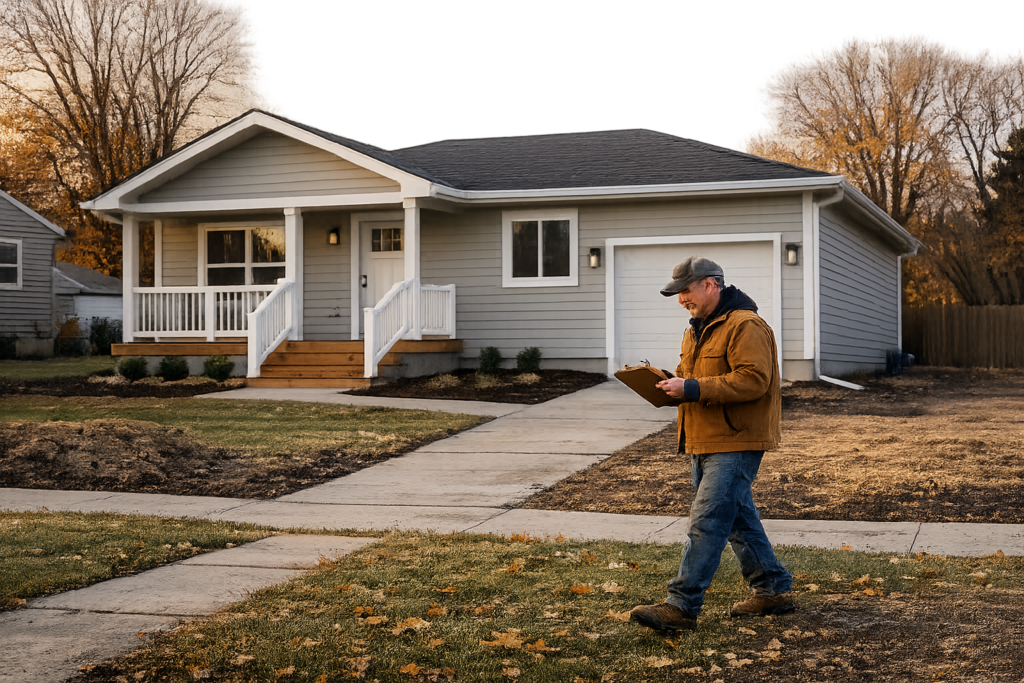
Quartz counters in a house where the neighbors have laminate. Custom tile in a bathroom no buyer will pay extra for. Over improving flip finishes is one of the quietest ways to turn a good margin into a break-even deal, because the money goes into the house and never comes back out at the sale. Buyers pay for a house that fits its street, not for the nicest house on it. The fix is simple: set your finish level from the comps before you pick a single material. Below, I walk through how I match finishes to the neighborhood, a Fairmont Park example with made-up numbers, and how your loan terms shape the rehab budget you should actually spend.
What Over Improving Flip Finishes Really Costs
Over-improving means spending on finishes the sold comps don’t support. The house looks great, but the sale price doesn’t move enough to pay for it.
Every dollar above the neighborhood’s finish level comes straight out of your profit. Premium materials also tend to mean longer lead times and more days of carrying costs.
Let the Comps Set the Finish Level
I don’t pick finishes by what I’d want in my own kitchen. I pick them by what recent buyers paid for nearby. Here’s the process:
- Pull sold comps within a few blocks, going back about six months.
- Open the listing photos for the top sales and write down the counters, flooring, cabinets, and fixtures.
- Do the same for the lower sales, so you can see what the price gap bought.
- Choose a finish tier (basic, mid, or high) that matches the sales you want to compete with.
- Write that tier into your scope of work before you ask a contractor for a bid.
If the top sales have mid-level finishes, a high-end kitchen won’t carry you past them. It just costs more.
A Fairmont Park Example
I’m using Fairmont Park in Des Moines as the setting here. The numbers are made up to show the math, and they aren’t a statement about prices in that neighborhood.
Say you buy a house for $140,000. Your comps show that houses with mid-level finishes sell for about $250,000. You budget $40,000 for a mid-level rehab, and you figure $30,000 for closing, carrying, and selling costs. Your total cost is $210,000, so your profit is about $40,000.
Now say you decide to go high-end. You spend $65,000 on the rehab, with custom cabinets, premium counters, and upgraded tile. Your other costs stay at $30,000, so your total cost is $235,000. Even if the house sells for $255,000, which is a stretch, your profit is about $20,000.
You spent $25,000 more and got about $5,000 more at the sale. That’s a $20,000 hole in the deal, created by finishes the street didn’t ask for.
Where to Spend and Where to Hold Back
Matching the neighborhood doesn’t mean cutting corners. Some money gets spent no matter what:
- Roof, furnace, plumbing, and electrical. Buyers and inspectors expect these to be solid.
- Kitchens and bathrooms, at the level the comps show. Clean and current beats fancy.
- Curb appeal, because the first photo online is usually the front of the house.
Hold back on designer fixtures, custom built-ins, and upgrades that only show up in a closeup photo. If a buyer can’t see it in the listing, it’s hard to get paid for it.
Don’t Swing the Other Way
Under-improving is a mistake too. If the comps show updated kitchens and yours looks like 1995, buyers move on. The goal isn’t the cheapest rehab. It’s a rehab at the same level as the houses buyers are comparing yours to.
How Loan Terms Frame the Rehab Budget
When a lender funds the rehab, it’s easy to treat that money like it’s free to spend. Here are the Little Guy Loans terms:
- Up to 90% of the purchase price (loan-to-cost).
- Up to 100% of rehab costs.
- Maximum 70% of ARV, which is the controlling cap.
That last one matters here. Your after-repair value is set by what the comps support, and the loan can’t go past 70% of it. Spending more on finishes doesn’t raise the ARV unless the market pays for it, so it can’t raise the loan either. Extra rehab dollars come out of your pocket.
FAQ
What is over-improving a flip?
Over-improving is spending on finishes or upgrades that the comparable sales in the area don’t support, so the added cost isn’t recovered in the sale price.
How do you know what finish level to use on a flip?
A finish level is a tier of materials (basic, mid, or high) that matches the houses buyers are comparing yours to. Pull recent sold comps, study their listing photos, and choose the tier those sales show.
Does a bigger rehab budget always raise the sale price?
A rehab budget is the money you plan to spend on repairs and upgrades, and a bigger one only raises the sale price when buyers in that area pay more for those upgrades.
Can a lender fund a rehab that goes past the comps?
A hard money loan is capped by the property’s after-repair value, so a rehab that goes past what the comps support doesn’t raise the loan amount. The extra cost lands on you.
The Takeaway
The best finish level for a flip is the one the street already expects. Pull the comps, study what sold, and set your tier before you shop for materials. Spend where buyers and inspectors look first, and hold back where the money won’t show up in the price. Run both versions of the numbers, mid-level and high-end, and let the profit decide. Remember that your loan caps at 70% of ARV, so every dollar past the comps’ finish level is your own cash. A flip that matches its neighborhood sells cleaner, carries for fewer days, and leaves you more room when something goes sideways. A flip that outdresses its neighbors usually just makes the contractor happy.