
Every few weeks another investor asks me the same question: can you actually flip a house in Iowa with no money down? The short answer is yes, but not the way most people picture it. No money down hard money is not free money. It is a specific way of stacking a hard money loan with a second funding source so your own cash out of pocket drops close to zero. I have watched investors structure it well and walk into a rehab in Beaverdale with almost nothing invested. I have also watched investors chase it on a deal that could not support the math and come up short at the closing table. The difference comes down to understanding exactly what the loan covers and what has to fill the gap.
What “No Money Down” Hard Money Really Means in Iowa
A hard money loan on its own almost never gets you to zero cash out of pocket. On a typical Iowa flip, the loan covers a large share of the purchase price and the rehab, but you are still bringing closing costs, reserves, and whatever gap sits between the loan amount and the total project cost. “No money down” happens when you layer a second source of funding underneath or alongside that hard money loan so your own cash contribution shrinks to almost nothing. It is a structure, not a loan product. Nobody hands you 100% financing with no strings attached.
The Three Ways Investors Get to Little or No Cash at Closing
I see three structures come up again and again with Iowa investors who pull this off. Each one fills the gap between what the hard money loan covers and what the deal actually costs.
- Seller carry-back behind the hard money loan. The seller finances a slice of the purchase price as a second position behind your hard money lender. This works best with motivated sellers, inherited properties, or landlords ready to exit.
- Gap funding from a private money partner. A private investor covers the remaining cash to close and takes a fixed return or a split of the profit. This is the most common route for investors with a track record but not a lot of liquid cash sitting around.
- Cross-collateralizing equity you already have. If you own another property free and clear or with substantial equity, that equity can sometimes stand in for cash at closing instead of a check from your account.
All three depend on the same thing: the deal has to leave enough room for a second funding source to get paid back. That is where the math comes in.
The Math That Decides Everything: The 70% ARV Cap
Every no money down structure lives or dies on one number: the maximum 70% of after-repair value that controls how much a hard money loan will fund, regardless of purchase price or rehab budget. That cap decides how much room is left for a second funding source.
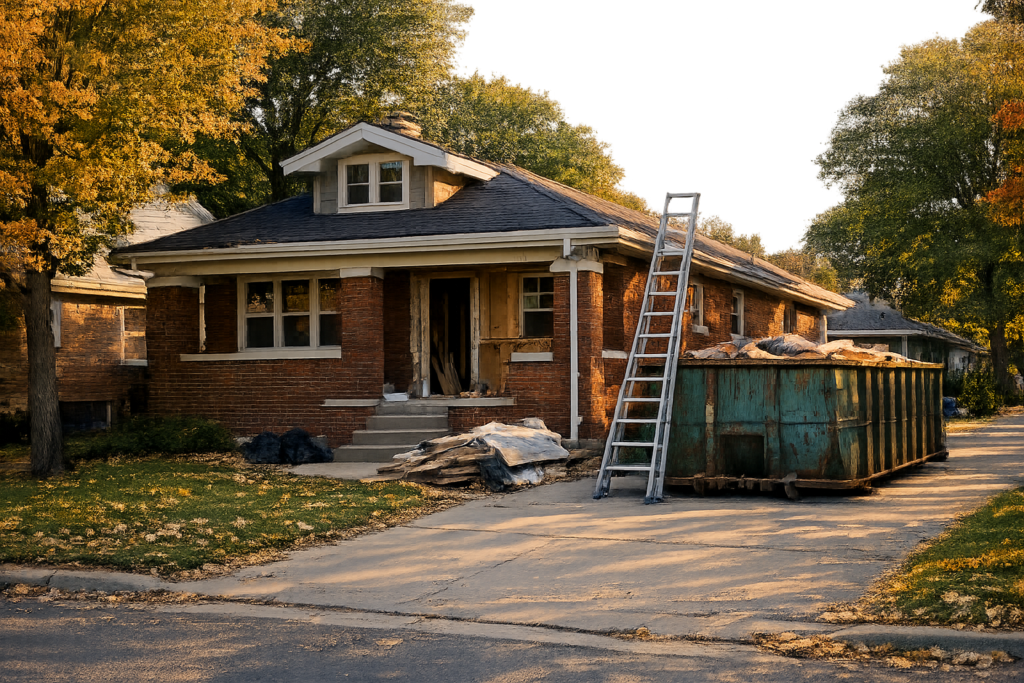
Here is a real example. Say you find a bungalow in Beaverdale listed at $140,000, needing $35,000 in rehab, with an ARV of $260,000 once it is finished. Seventy percent of that ARV is $182,000. That $182,000 is the most a hard money loan can go to, combining the purchase price and the rehab budget, even though 90% of purchase and 100% of rehab would otherwise put you higher on their own. In this case, $182,000 covers the full $175,000 all-in cost, so there is enough spread to structure gap funding for closing costs and reserves with room to spare.
Now flip the numbers. If that same bungalow needed $60,000 in rehab and the ARV only came in at $220,000, 70% of ARV is $154,000, which does not cover a $200,000 all-in cost. No amount of clever structuring fixes a deal where the ARV cap does not leave room for the base loan, let alone a second funding source.
When It Works, and When It Doesn’t
No money down structures are not a strategy you apply to every deal. They are a fit for a specific kind of deal and a specific kind of investor.
- It works when the spread between the 70% ARV cap and your all-in cost is wide, usually a deal with strong after-repair value relative to purchase price.
- It works when you already have a relationship with a private money partner or a seller willing to carry paper.
- It does not work on a thin-margin deal where the ARV cap barely covers the base loan, because there is no room left for a second position.
- It does not work if you are new to a market and do not yet have the credibility to ask a private partner or seller to trust you with a second position.
What Lenders Want to See Before They’ll Stack Funding
Hard money loan requirements for a stacked structure are stricter than a standard deal, because your lender wants comfort that the second funding source will not create problems at closing or during rehab draws.
- A clear, documented source for the second position, whether that is a seller carry-back agreement, a private lender’s commitment letter, or proof of equity in another property.
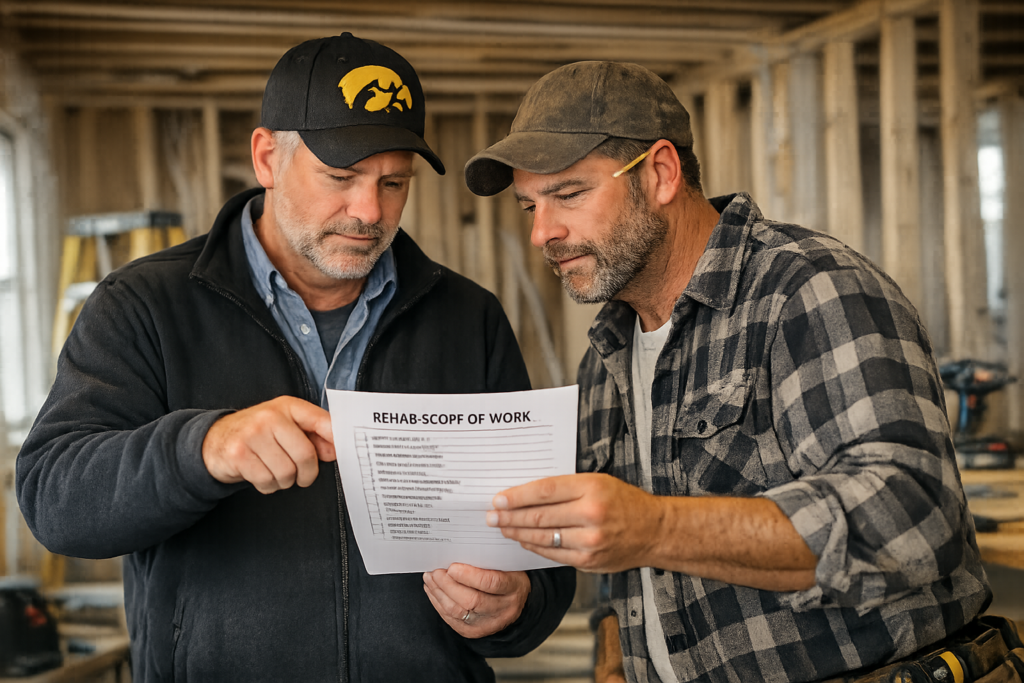
- A realistic scope of work and rehab budget, not a number pulled out of thin air.
- A track record on at least a few completed deals, or a strong contractor relationship if you are newer to flipping.
How the Base Loan Is Structured
Whatever gap-funding structure you use, it sits on top of the same base loan terms. The base loan funds up to 90% of purchase price and up to 100% of rehab costs, with a maximum of 70% of ARV controlling the total loan amount. That 70% ARV cap is what decides whether there is room for a second funding source in the first place, not the 90% or 100% figures on their own.
FAQ
What does no money down hard money mean?
No money down hard money is a financing structure that combines a hard money loan with a second funding source, like seller financing or a private gap lender, so an investor’s cash contribution at closing is minimal or zero.
How much can a hard money lender in Iowa fund on a flip?
A hard money loan in Iowa is typically a loan that covers up to 90% of purchase price and up to 100% of rehab costs, capped at a maximum of 70% of after-repair value.
What is gap funding on a fix and flip?
Gap funding is short-term capital that covers the difference between what a hard money lender will fund and the total cash needed to close and rehab a deal.
Can every flip be financed with no money down?
A no money down structure is an approach that only works when the after-repair value leaves enough room under the 70% ARV cap to cover both the base loan and a second funding source.
No money down hard money is not a trick or a loophole. It is a structure that only works when the numbers leave room for it, and the numbers only leave room for it when the after-repair value is strong enough relative to what you are paying and spending on rehab. Run the 70% ARV math first, every time, before you go looking for a seller to carry paper or a partner to fill the gap. The investors who make this work are not the ones with the best pitch. They are the ones who found a deal with enough spread to support two funding sources instead of one, and who brought a lender a scope of work and a track record worth trusting.