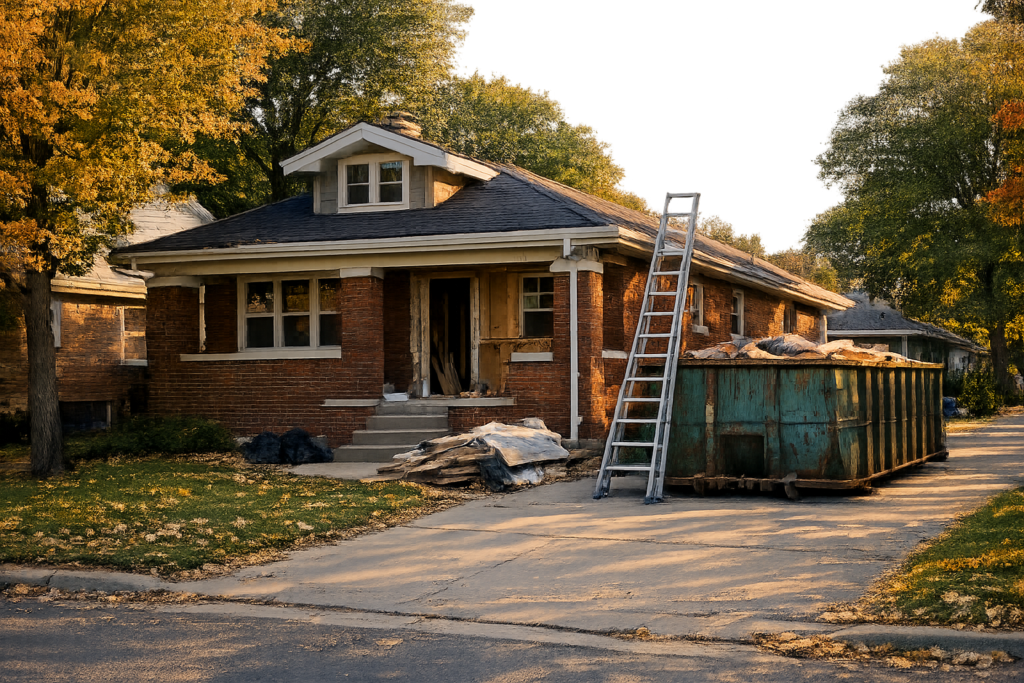
Every flipper I know has a rehab story that starts fine and ends $6,000 over budget. Not because the house was a bad buy. Because nobody checked the work against the money before the money went out the door. Avoiding contractor cost overruns isn’t really about finding a more honest contractor, most of them are honest. It’s about building a system that catches a mismatch between draw requests and actual progress before it eats your margin. On a recent flip in West Des Moines, a $28,000 rehab budget crept to $34,000 because draws kept getting approved on a phone call instead of a walkthrough. Here’s the draw-by-draw checklist I use to keep a budget honest from the first draw to the last.
Avoiding Contractor Cost Overruns Starts Before Demo Day
Most investors assume overruns happen because a contractor pads invoices. In my experience, it’s almost always a timing problem instead. There’s no checkpoint between “money released” and “work verified,” so by the time you notice a problem, two or three draws are already gone.
Avoiding contractor cost overruns means moving that checkpoint earlier, before the contract is signed, not after the first invoice shows up. That starts with two documents most first-time flippers skip entirely: a real scope of work and a real draw schedule.
Set the Scope of Work Before You Set the Budget
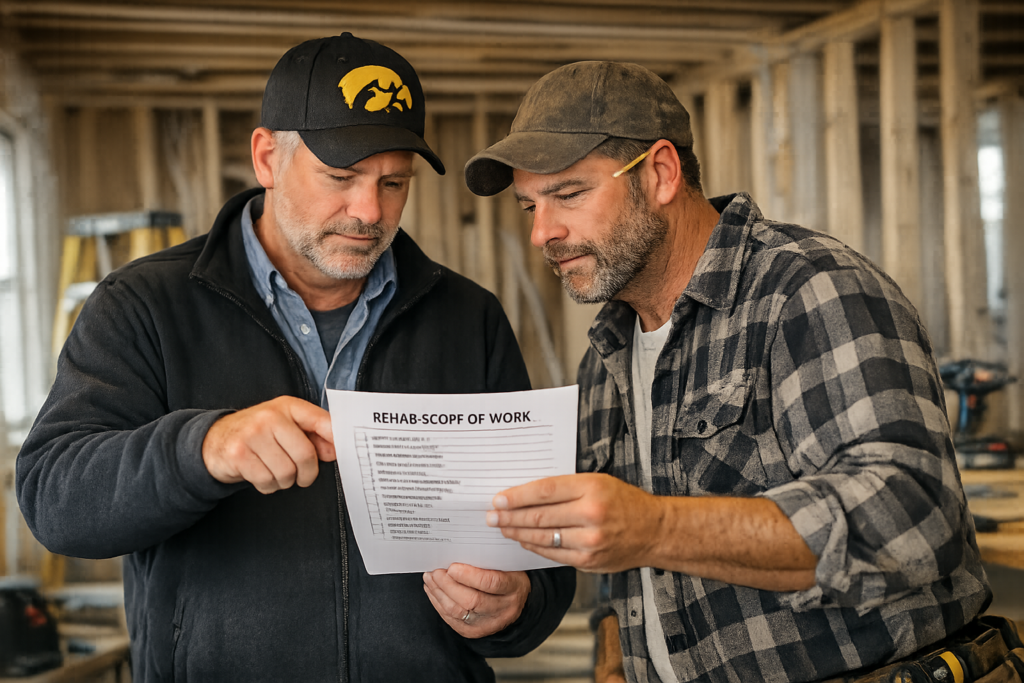
A scope of work isn’t a one-page estimate with a dollar figure at the bottom. It’s a room-by-room, trade-by-trade list of exactly what’s being done, what materials are going in, and what “finished” looks like for each line item.
Every scope of work I sign off on before a rehab starts includes:
- Material and grade specified for every trade, not “new flooring” but “LVP, 20 mil wear layer, throughout main level”
- Who pulls each permit and who pays the fee
- A rough timeline for each phase, tied to the draw schedule, not just a finish date
- A written change order process, so scope creep has a paper trail instead of a verbal agreement nobody remembers the same way
A vague scope of work is the single biggest predictor of a cost overrun I see on Iowa flips. If the scope can’t tell you what “done” looks like, you have no way to know when a draw request is legitimate.
Build a Draw Schedule That Protects Your Margin
A rehab draw schedule ties every payment to a completed, inspected milestone, never to a calendar date. Demo and rough-in might be draw one. Drywall, paint, and flooring might be draw two. Final punch list and inspection is always the last draw, and it should always be the smallest one.
Two rules I don’t bend on any Iowa rehab draw schedule:
- No draw gets released for work in progress, only for work completed and verified
- The final draw holds back enough to matter, typically 10 percent of that phase, so the contractor has a real reason to finish the punch list instead of moving to the next job
The Draw-by-Draw Checklist
This is the exact sequence I run before approving any draw request, whether it’s a $4,000 milestone or a $12,000 one.
- Walk the property in person against the scope of work, don’t approve from a phone call or a text photo
- Compare the completed work line by line against the scope, not against the invoice total
- Take dated photos of every completed item before releasing funds, they become your record if a dispute ever comes up
- Confirm materials on site match the grade and brand written into the scope, not a cheaper substitute
- Hold back the retainage percentage on every draw, not just the last one
- Never pay for materials or labor that haven’t happened yet, no matter how reasonable the request sounds
Red Flags That Predict an Overrun Before It Happens
A few patterns show up almost every time a rehab budget is about to run over. Watch for these on any Iowa flip:
- A draw request comes in before the previous milestone actually passed inspection
- Invoices get vaguer instead of more detailed as the job goes on
- A contractor starts mentioning material price increases without a corresponding change order
- Subcontractors keep changing mid-project with no explanation
- You get pushback on doing the walkthrough in person before a draw
Any one of these on its own might mean nothing. Two or more on the same job means it’s time to slow down, not speed up.
What I Do When a Draw Request Doesn’t Add Up
I had a bungalow in Beaverdale where the drywall and paint draw came in $1,800 higher than the scope of work called for. Instead of arguing on the phone, I asked for an itemized change order tied to specific scope line items. Turned out a water-damaged section behind a kitchen wall wasn’t in the original scope, legitimate work, but it needed its own paper trail before I released another dollar.
That’s the process, every time. Pause the draw. Walk the site. Ask for an itemized change order that maps back to the scope of work. Keep it businesslike, not personal. A good contractor expects this. A contractor who resents it is telling you something.
What This Looks Like With an Iowa Hard Money Loan
For context on how rehab financing actually works: hard money loans on an Iowa flip typically fund up to 90% of the purchase price and up to 100% of rehab costs, with the total capped at a maximum 70% of the after-repair value. That 70% ARV cap is the controlling number, it sets the ceiling no matter how the purchase and rehab pieces get split.
Rehab dollars on a hard money loan get released the same way I just described, in draws tied to completed and verified work, not handed over up front. That structure exists for the same reason your own draw schedule should: it protects the margin on the deal for everyone with money in it.
FAQ
What is a rehab draw schedule?
A rehab draw schedule is a payment plan that releases rehab funds in installments tied to completed, inspected milestones instead of paying a contractor the full amount up front.
What causes contractor cost overruns on a flip?
A cost overrun is an unplanned rehab expense that pushes your all-in price past your original budget, most often caused by a vague scope of work, draws approved without a walkthrough, or change orders that never got written down.
How much should I hold back on a rehab draw?
A retainage holdback is a percentage of each draw kept back until the work passes final inspection, typically around 10 percent, so the contractor has a real incentive to finish the punch list.
Should I pay a contractor before work is finished?
No. A draw should only be released after the associated work is complete, inspected in person, and matched line by line against the written scope of work.
Cost overruns rarely come from a bad contractor. They come from a rehab budget with no checkpoints between the money and the work. A written scope of work, a milestone-based draw schedule, and an in-person walkthrough before every draw closes almost every gap where an overrun sneaks in. None of it is complicated. It just has to happen every single time, not just when something already feels off. Build the system once and it protects the margin on every flip after this one.