You’ve got a house under contract review, or maybe you’re staring at a listing wondering if it pencils. Either way, the same question decides the whole deal: what will this property be worth once the rehab is done? That number is the ARV calculation, and getting it wrong is the single biggest reason Iowa flippers either lowball a good deal into someone else’s hands or overpay and eat their profit in the rehab. I run this number before I look at financing, before I call a contractor, before anything else, because every other figure on the deal flows from it. Here’s the process I actually use, plus the mistakes that quietly wreck a good ARV number.
How I Run an ARV Calculation on Every Iowa Flip
ARV, or after-repair value, is the price a property is expected to sell for once renovations are complete and it’s back on the market in finished, move-in condition. It is not what the house is worth today. It is not the listing price down the street. It’s what a buyer will actually pay for your finished product, based on what similar finished homes have actually sold for.
I pull three to five comps, sold, not active, within the last three to six months, inside the same neighborhood or the same elementary school boundary. Then I adjust for square footage, bed and bath count, lot size, and finish level. The goal isn’t a perfect number. It’s a defensible one you’d bet your own money on, because you are.
The Comp Rules I Won’t Break
Bad comps produce a bad ARV, and a bad ARV produces a bad offer. Before I trust a comp, it has to clear all of these:
- Sold, not active or pending. Asking price tells you what a seller hopes for. Sold price tells you what a buyer actually paid.
- Closed within the last three to six months. Iowa’s market moves enough season to season that a comp from last spring can mislead you in the fall.
- Within about 20 percent on square footage and the same bed and bath count, or close to it.
- Same neighborhood or school boundary. A block can matter more than a mile in the Des Moines metro.
- Comparable finish level to what you’re planning, not to what the house looks like today. You’re comping your finished product, not your starting point.
If I can’t find three solid comps that meet all five, I widen the time window before I widen the map. A stale comp in the right neighborhood beats a fresh comp in the wrong one.
A Beaverdale Example: Running the Math
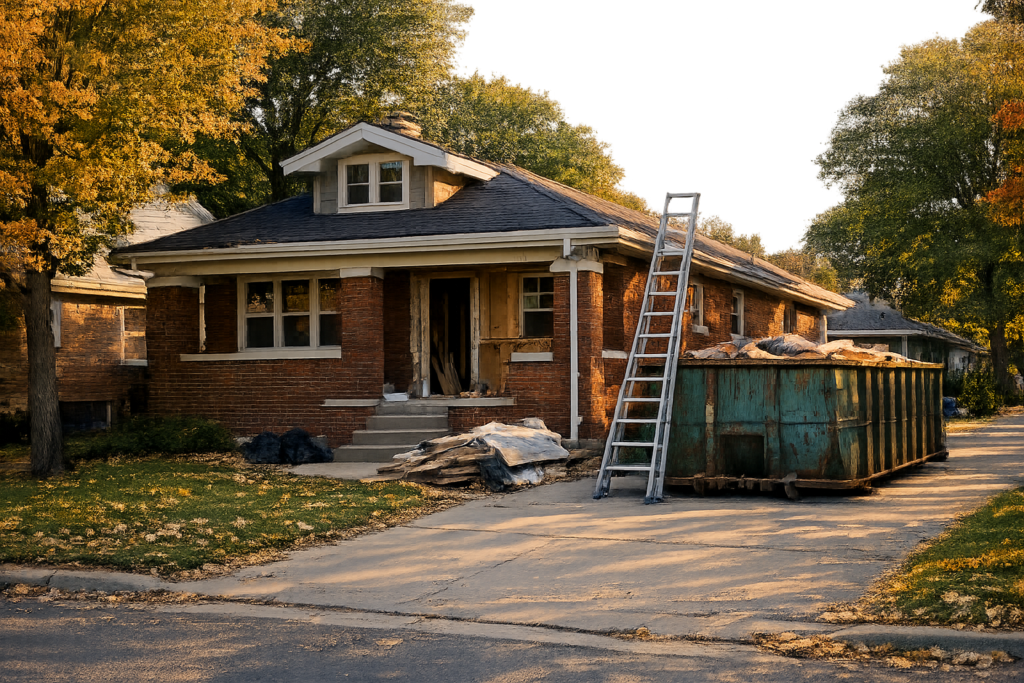
Say you’re looking at a three-bed, one-bath bungalow in Beaverdale that needs a full kitchen and bath update, new flooring, and some electrical work. You pull three solds from the last four months: a similar bungalow two blocks over that sold for $305,000 fully renovated, one on the next street that sold for $298,000 with a slightly smaller footprint, and one three blocks out that sold for $312,000 with an added half bath.
Average those three and adjust down slightly for the smaller lot on your subject property, and you land on an ARV around $300,000. Not $320,000 because you like the block. Not $280,000 because you’re nervous about the rehab. The comps set the number, not your gut.
The Mistakes That Wreck an ARV Number
I see the same handful of errors take down otherwise good deals, over and over:
- Using active listings as comps instead of solds. Active listings are marketing, not proof.
- Comping to your own planned finish level instead of what the market actually supports. A $60,000 kitchen doesn’t always get you a $60,000 bump in sale price.
- Ignoring days on market for your comps. If similar homes sat for 90 days, your ARV needs a haircut, even if the sale price looks good on paper.
- Stretching the search radius too far because the immediate area doesn’t have enough solds. A comp two zip codes away isn’t a comp.
- Forgetting that Iowa has a real slow season. A comp that sold fast in May might sit longer if your listing hits in December.
Why ARV Sets Your Max Offer, Not the Other Way Around
Once you have a real ARV, your max offer follows a simple rule: take your ARV, subtract your rehab budget, and subtract the margin you need to make the deal worth doing. Most Iowa investors I talk to use something close to 70 percent of ARV, minus rehab, as their ceiling. On that $300,000 Beaverdale ARV with a $45,000 rehab, that puts your max offer somewhere around $165,000. If the seller wants more than that, it’s not your deal, no matter how much you like the house.
This is the order that protects your margin: ARV first, rehab budget second, offer last. Investors who flip that order, deciding on a price they want to pay and then finding comps to justify it, are the ones who call me after closing wondering where the profit went.
What This Means for Financing the Deal
Once you’ve got a solid ARV, it also tells you what a hard money loan can actually fund. On a typical fix and flip loan here, you’re looking at up to 90% of purchase price, up to 100% of rehab costs, with a maximum of 70% of ARV controlling the total loan amount. That 70% ARV cap is the same discipline you just used to set your offer. It’s not a coincidence. A lender who caps the loan at 70% of ARV is protecting the same margin you’re protecting when you calculate ARV honestly in the first place.
FAQ
What is ARV in real estate?
ARV is the after-repair value of a property, the price it’s expected to sell for once renovations are complete, based on recent comparable sales of similarly finished homes in the same area.
How do I calculate ARV on an Iowa flip?
A reliable ARV calculation pulls three to five sold comps from the last three to six months in the same neighborhood or school boundary, adjusts them for square footage and finish level, and averages the result rather than anchoring to a single high sale.
What’s the difference between ARV and current market value?
Current market value reflects the property’s condition today, while ARV reflects what the property will be worth after the planned rehab is finished and it competes with fully renovated homes on the market.
How many comps do I need to calculate ARV accurately?
Three solid, recently sold comps that meet strict criteria on location, size, and finish level will get you a more reliable ARV than ten loosely matched comps pulled from a wider search.
ARV isn’t a formality you run through to satisfy a lender. It’s the number that decides whether a deal makes you money or costs you money, months before you find that out the hard way. Pull real solds, hold the comp rules, and let the math set your offer instead of your excitement about the house. Get this number right and every decision after it, your offer, your rehab budget, and your exit price, gets a lot more straightforward.