You found a deal. Now you’re staring at a loan application, wondering what a hard money lender actually wants to see. If you’ve never done this before, that question can feel bigger than the deal itself. Here’s the short version: to qualify for a hard money loan in Iowa, you need a property that pencils, a rehab number you can defend, some cash in the deal, and a way out when the work is done. That’s most of it. Lenders who work with real estate investors aren’t grading your resume. They’re grading the deal. This post walks through exactly what gets checked, how the numbers work together, and what a first-time flipper in the Des Moines metro should have ready before applying.
What It Actually Takes to Qualify for a Hard Money Loan in Iowa
When you bring me a deal, I’m not asking for two years of tax returns or grading your W-2. I’m underwriting the property first and you second. That’s the biggest difference between a hard money loan and a bank loan, and it’s also why first-time investors qualify more often than they expect.
Here’s what I actually look at before I approve a loan:
- A property under contract, or close to it, with a real address and price.
- Recent comparable sales that support the after-repair value you’re claiming.
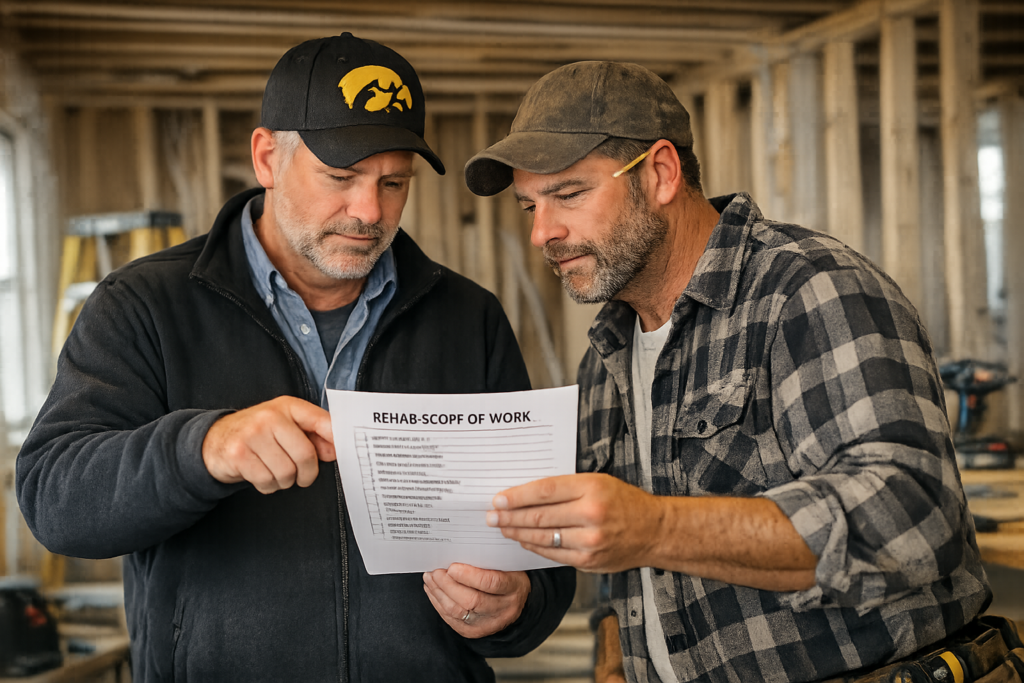
- A written rehab scope with real line items, not a round number you guessed at.
- Cash for your share of the purchase and enough reserves to carry the project.
- A believable exit: sell to a retail buyer, or refinance and hold.
How I Look at the Deal, Not Just You
New investors assume the loan is about their financial history. Mostly, it isn’t. I care whether the numbers hold up.
Take the after-repair value. If your comps are stretched, thin, or pulled from the wrong pocket of a metro, the loan gets harder to approve no matter how strong your credit is. Same with the rehab scope. A one-line budget that says “$25,000, rehab” tells me you haven’t walked the property closely enough yet.
The Requirements That Actually Move the Needle
If you want to know what to have ready before you apply for a hard money loan, focus here first:
- Purchase price and after-repair value that are both backed by real data, not hope.
- A rehab budget broken into phases: demo, mechanicals, cosmetics, and so on.
- Proof of funds for your portion of the deal.
- An exit plan that matches current market conditions, not last year’s.
What Cash You Actually Need to Bring
This is the part first-timers underestimate. A hard money loan rarely covers every dollar of a deal, so you bring cash to close the gap. That cash usually covers part of the purchase price, your closing costs, and a reserve cushion in case the rehab runs long or a permit takes an extra week.
The deeper the discount you buy at, the smaller that gap gets. A property you buy well under market value needs less of your own cash to make the numbers work. A thin deal needs more.
The Loan Terms Behind the Math
Here’s exactly how I structure Iowa fix and flip loans, so you know what you’re working with before you apply:
- Up to 90% of the purchase price.
- Up to 100% of rehab costs.
- A maximum of 70% of the after-repair value, and that ARV cap is the controlling limit on the whole loan.
That last point matters more than people realize. Your purchase and rehab financing can both look fine on their own and still get capped if the total pushes past 70% of ARV. Run that number before you get attached to a house.
A Quick Example From the Des Moines Metro
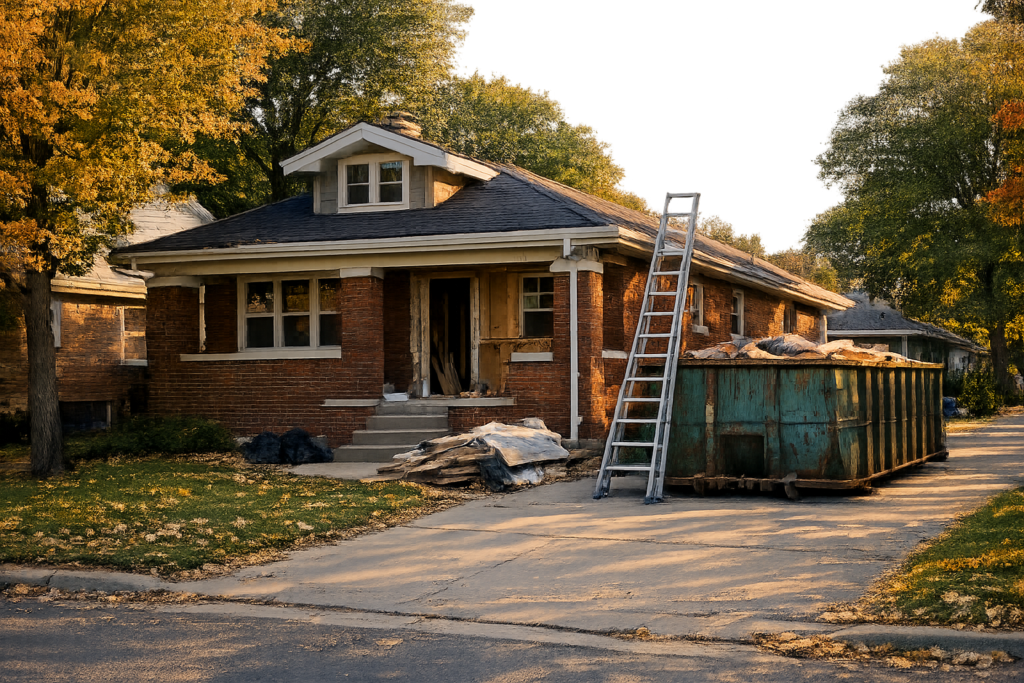
Say you’re looking at a ranch in Ankeny listed at $165,000, with $35,000 in rehab and a realistic ARV of $250,000 based on recent sales nearby. Seventy percent of that ARV is $175,000. Your purchase plus rehab totals $200,000, which is over the line, so this version of the deal doesn’t qualify as structured.
Bring the purchase price down to $140,000, closer to what distressed inventory in that price band is actually trading for right now, and your all-in cost drops to $175,000. Now the deal fits, and you can see exactly what cash you need to bring to close. The same math applies whether you’re looking in Altoona, Norwalk, or anywhere else in the metro. The ARV cap doesn’t move. The purchase price is the lever you control.
FAQ
What is a hard money loan?
A hard money loan is a short-term loan that is secured by real estate rather than your income or credit history, and it’s used to fund the purchase and rehab of an investment property.
What do I need to qualify for a hard money loan in Iowa?
To qualify for a hard money loan in Iowa, you need a property under contract, a realistic rehab scope, comparable sales that support your after-repair value, cash for your share of the deal, and a clear exit plan.
Do I need good credit to get a hard money loan?
Credit gets checked, but it isn’t the deciding factor. A hard money lender weighs whether the property and the plan support the loan, so a thin credit file doesn’t automatically rule you out.
How much cash do I need to bring to my first flip?
You typically bring the share of the purchase price above what the loan covers, your closing costs, and reserves to carry the project, and the exact number depends on how the deal fits the 70% ARV limit.
Qualifying for a hard money loan in Iowa comes down to the deal more than your resume. Bring a property with real comps, a rehab scope you can defend line by line, cash for your share of the purchase, and reserves to carry it if the timeline slips. Understand the 70% ARV cap before you fall in love with a house, because that number, not your credit score, usually decides whether a deal works. First-time investors get approved every week in this market, not because they had a perfect financial history, but because they showed up with a deal that made sense. Do that homework before you apply, and the financing conversation gets a lot shorter.