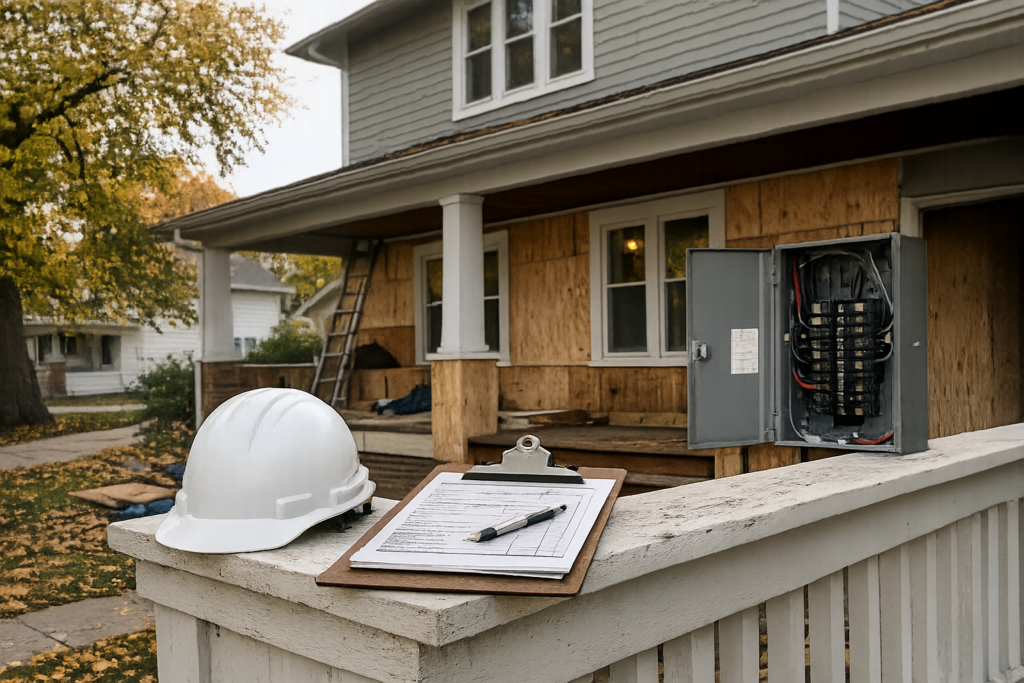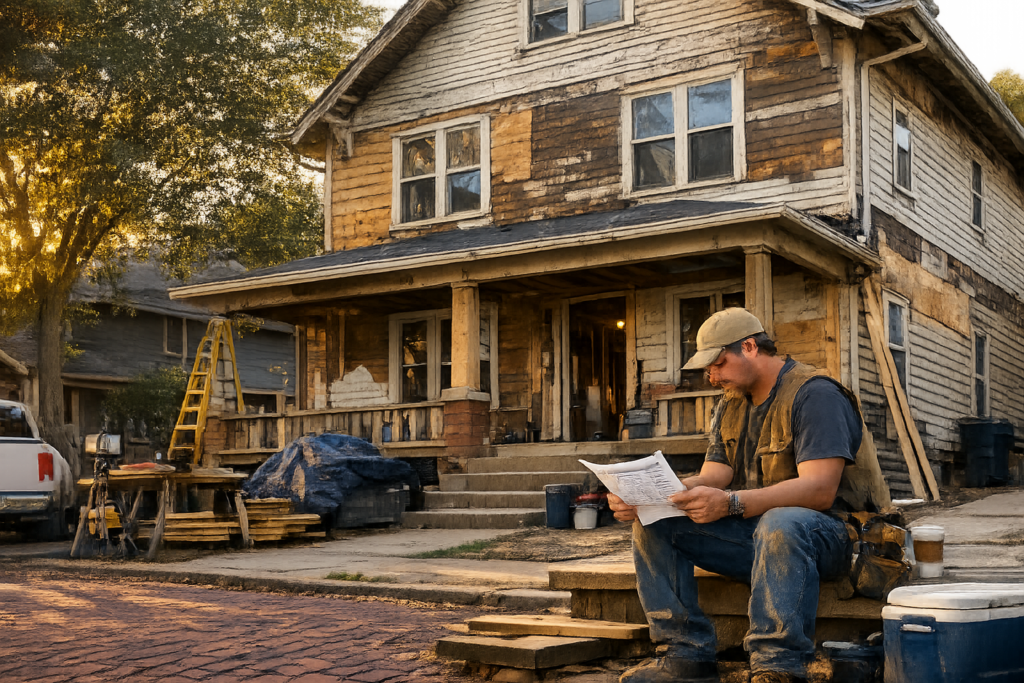

Picture this. Your crew finishes demo on a Friday. Monday morning, a pipe lets go in the upstairs bathroom and the new drywall below it is soaked. You call your insurance agent, and the answer is not the one you wanted. Builder’s risk insurance for a flip is the coverage that sits between you and that call, and plenty of first-timers skip it until after demo starts. It is a policy that covers the structure and the materials on site while the renovation is underway, and you want it bound before the first dumpster shows up. Here is how I think about it, what a lender will likely ask to see, and how to put the cost in your deal math before you make an offer.
Builder’s Risk Insurance for a Flip: What It Actually Covers
A builder’s risk policy is built for a property under construction or renovation. It generally covers the structure and the building materials and supplies you have on site against named perils like fire, wind, and vandalism. Exact coverage varies by carrier and by policy, so the quote and the policy language are what count.
The reason flippers need it comes down to the house itself. A gutted house is not a normal house. Walls are open, systems are exposed, and nobody lives there. Policies written for occupied homes often treat a vacant or under-renovation property very differently, and some limit or exclude coverage once a home sits empty past a set number of days. Your agent can tell you where the line is on your policy.
Why a Standard Homeowner Policy Usually Falls Short
Most flips are vacant for the whole project. That one fact changes the insurance picture. A few things to ask about before you assume you are covered:
- Does the policy limit or exclude coverage when the home is vacant?
- Does it cover materials stored on site, like cabinets, flooring, and appliances waiting to be installed?
- Is there a gap between a standard landlord or homeowner policy and what a renovation needs?
- What happens to coverage if the project runs past the policy term?
Get the answers in writing. A verbal yes from an agent on a busy afternoon does not help you after a claim.
What a Lender Will Want to See
Lenders generally require proof of insurance on the property before closing, and they usually want to be listed on the policy as the mortgagee or loss payee. That protects the collateral. Confirm the exact requirement with whoever is funding your deal, and do it early. Insurance paperwork is one of those items that can hold up a closing for no good reason when it gets left to the last day.
Here is a simple order of operations that keeps it clean:
- Get your scope of work and purchase price in hand.
- Ask your lender what coverage and endorsements they require.
- Call an insurance agent who writes renovation or vacant-property coverage and ask for a quote based on that scope.
- Bind the policy so it is effective on your closing date, not the day demo starts.
- Send your lender the proof of coverage before the closing table.
A Highland Park Example: Where the Policy Fits in the Deal Math
Say you are looking at a two-story in Highland Park that needs a full interior rehab. New kitchen, new baths, mechanicals, flooring, paint. It will sit empty for the length of the project, and you will have a pile of materials delivered and stored inside. I am using this as a walk-through of the math, not a statement about that neighborhood.
Insurance goes on the same sheet as everything else. Add a line for the builder’s risk premium. Add a line for utilities, taxes, and loan interest while the house is vacant. Then add a cushion in case the schedule slips, because a longer project means a longer policy term. If your first quote assumes four months and the job runs six, you may owe for the extra time.
Do not guess at the premium. Get a quote tied to your actual purchase price and scope, then plug in the real number. The cost is an input to your max offer, same as the rehab budget.
Loan Terms to Plug Into Your Numbers
Here are the Little Guy Loans terms that size the loan, so you can run your insurance line against a real budget:
- Up to 90% of the purchase price (loan-to-cost).
- Up to 100% of your rehab costs.
- A maximum of 70% of ARV, which is the controlling cap.
The 70% of ARV cap decides the final loan amount. Anything that pushes purchase plus rehab past it comes out of your pocket. Insurance and carrying costs are part of what you need cash for, so count them before you count on the loan.
FAQ
What is builder’s risk insurance for a flip?
Builder’s risk insurance for a flip is a policy that covers a property and its materials while a renovation is underway, protecting against named perils such as fire, wind, and vandalism.
Do I need builder’s risk insurance on an Iowa flip?
A lender will generally require proof of coverage on the property, and a vacant house under renovation is a poor candidate for a standard occupied-home policy, so you should confirm coverage with your lender and your agent before you close.
When should I buy the policy?
Bind the policy to take effect on your closing date, not on the day demo starts, so there is no gap between owning the house and insuring it.
Does the premium go into my deal math?
Yes. A builder’s risk premium is a project cost, and it belongs on your deal sheet next to your rehab budget and your carrying costs before you set your max offer.
What to Take From This
Insurance is not the exciting part of a flip, but it is the part that protects every other dollar you put in. A house under renovation is exposed in ways an occupied house is not, and the policy that fits it is not always the one you already carry. Ask your lender what they require. Ask your agent the vacancy and materials questions in writing. Bind coverage to start at closing, and put a real premium on your deal sheet before you write the offer.
None of this takes long when you do it up front. Treat the policy like any other line in your scope of work. Price it, schedule it, and confirm it before demo starts, and you remove one of the quieter ways a first flip goes sideways.