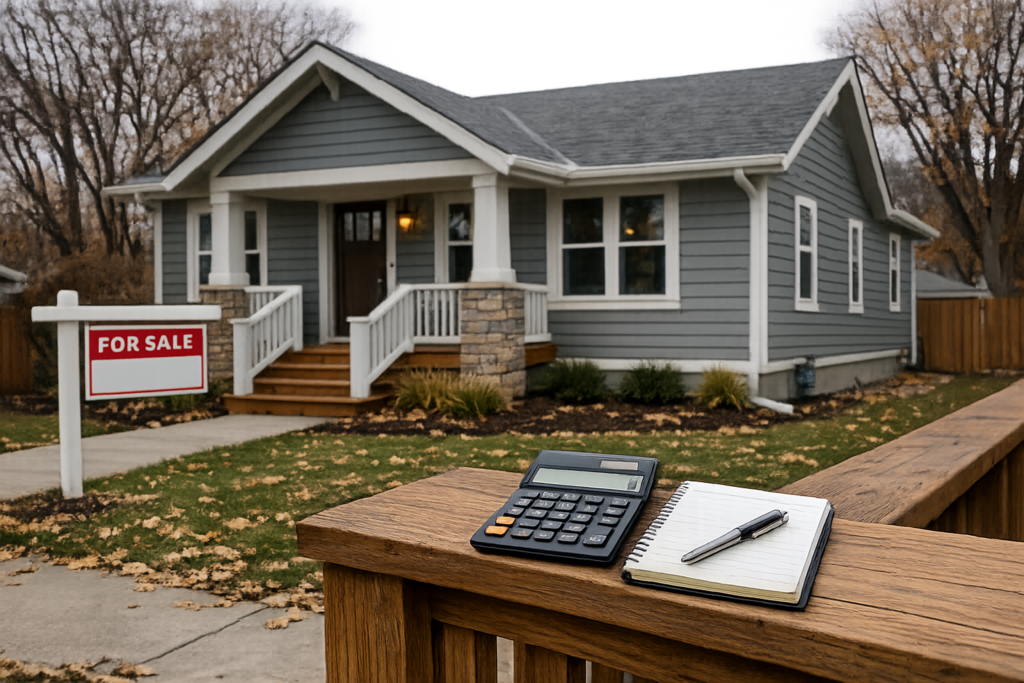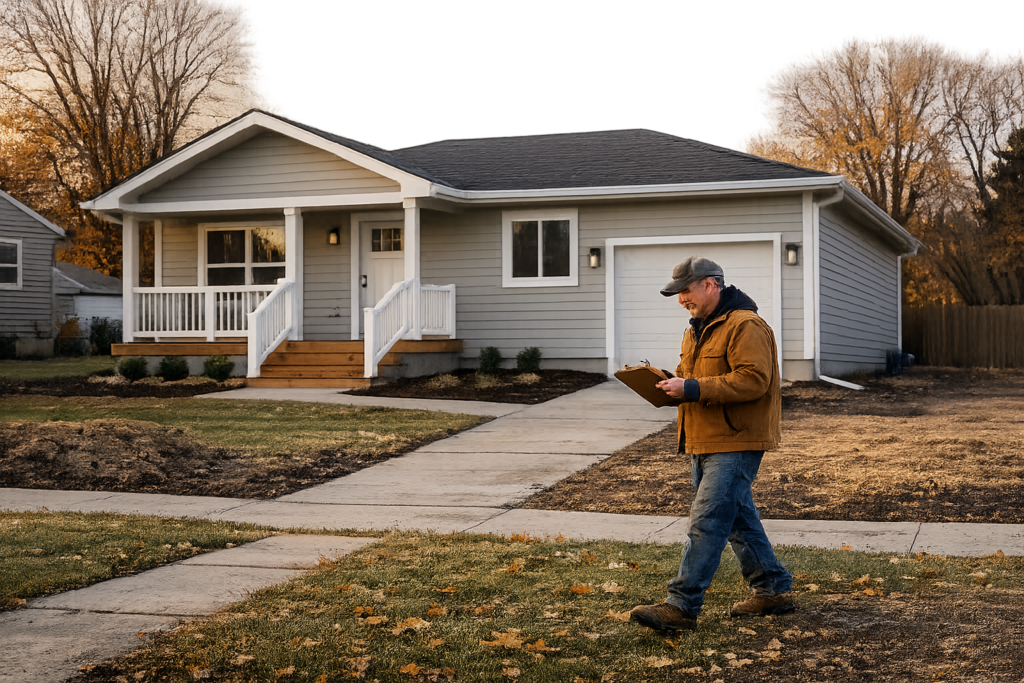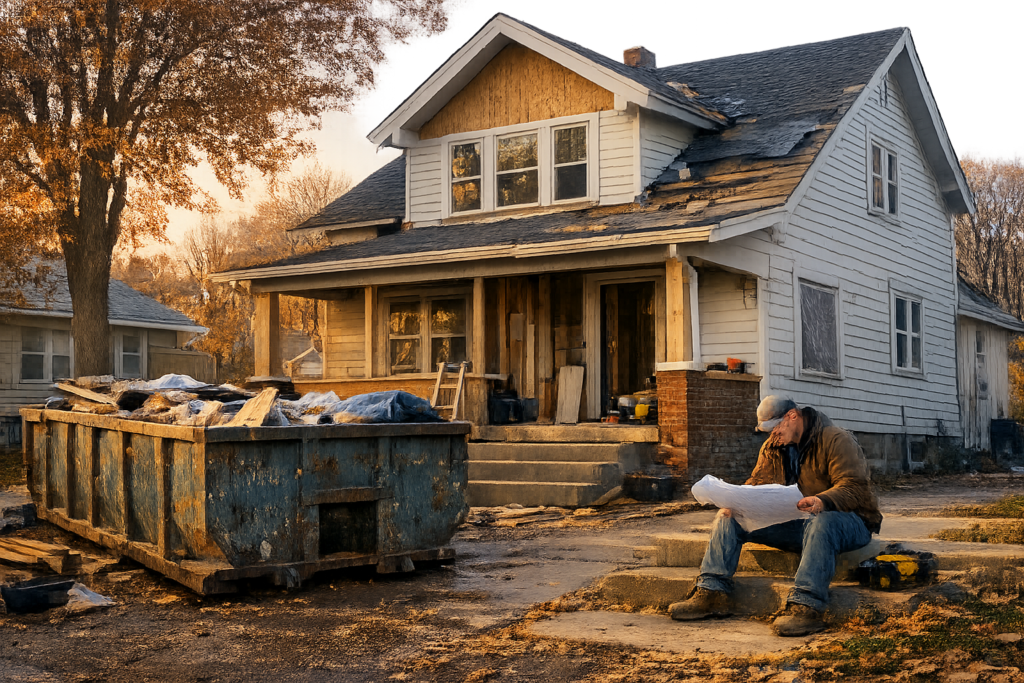
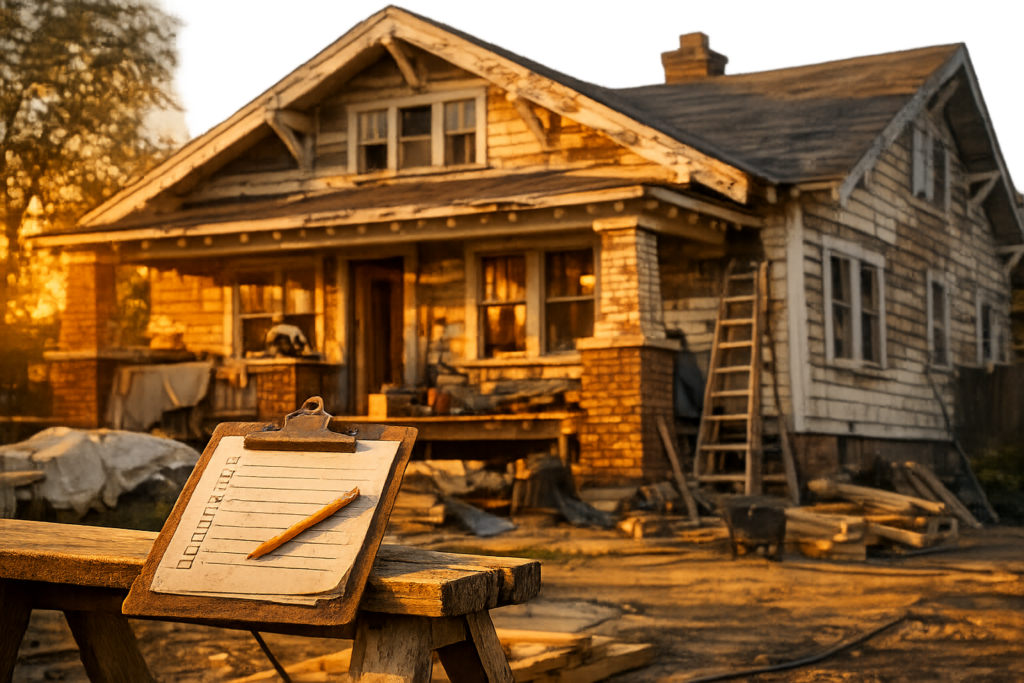
Your first flip usually doesn’t fail on the big stuff. It fails on a missed step: a permit nobody pulled, a rehab number nobody checked, a closing date that ran into a holding period you never priced. A fix and flip checklist Iowa investors can actually use does one job. It puts the steps in order so the expensive surprises show up before you own the house, not after. Think of it as a short list you run on every deal, whether it’s your first or your fifth. Here’s the sequence I’d walk any first-time flipper through, from the first set of comps to the day the sign goes in the yard.
The Fix and Flip Checklist Iowa Investors Should Run Before Making an Offer
Most of the real work happens before you write a number down. Run these four steps first.
- Pull comps and set your ARV. Use sold sales from the last 90 days, same neighborhood, similar size and condition. Two or three honest comps beat ten loose ones.
- Back into your max offer. Take ARV, subtract your rehab budget, your holding and selling costs, and the profit you need. That’s your ceiling. Don’t negotiate past it.
- Walk the house with a contractor. Not a quick look. Roof, mechanicals, foundation, water. Photos of everything.
- Write the scope of work. Room by room, line by line, with a number next to each line.
If a deal doesn’t survive those four steps on paper, it won’t survive them with a hammer in your hand.
Build a Rehab Budget That Has Room for Surprises
Every old Iowa house hides something. Knob-and-tube wiring in a 1920s Beaverdale bungalow. A sewer line in Ankeny that’s older than the fence. Galvanized plumbing behind a wall you didn’t plan to open.
So build the cushion in on purpose:
- Add 10 to 15 percent to your rehab number as a contingency line, and treat it as spent.
- Price the permit and inspection fees in your city, because Des Moines, Urbandale, and Altoona don’t run the same process.
- Get at least two bids on any line over a few thousand dollars.
Lock Down Your Team and Your Schedule
A flip is a schedule problem wearing a construction costume. Every extra month costs you taxes, insurance, utilities, and loan interest, and it eats margin you thought was safe.
Before closing, confirm who does what and when. Have your contractor, your title company, and your insurance agent lined up. Agree on a start date and a draw schedule in writing. Then plan your exit: list price, target days on market, and what you’ll do if it sits.
Know How the Loan Math Works
Financing is part of the checklist, not an afterthought. Here are the terms you’ll see with Little Guy Loans, so you can plug them into your numbers early.
- Up to 90% of the purchase price (loan-to-cost).
- Up to 100% of your rehab costs.
- A maximum of 70% of ARV, which is the controlling cap on every loan.
That last number matters most. If your purchase plus rehab pushes past 70% of ARV, the cap limits the loan, and you’ll need to cover the gap yourself. Run it before you offer, not at the closing table.
Track the Rehab and Run the Exit
Once you own it, stay on site. Check the work against the scope each week, take dated photos, and pay for finished work, not promises. Keep a running sheet of actual spend against budget so a small overage never turns into a big one.
When the punch list is done, stage the house, shoot clean photos, and price to the comps you pulled in step one. Then watch your days on market. Every week you hold costs real money.
FAQ
What is a fix and flip checklist?
A fix and flip checklist is an ordered list of steps that takes an investor from finding a deal through buying, rehabbing, and selling the property, so no cost or task gets missed.
How much contingency should I add to a rehab budget in Iowa?
A rehab contingency is a reserve line, usually 10 to 15 percent of the rehab budget, that covers hidden problems in older homes such as outdated wiring, plumbing, or foundation issues.
What is the 70% rule for a first flip?
The 70% rule is a pricing guide that says your total purchase plus rehab cost should stay at or below 70 percent of the after-repair value, which leaves room for costs and profit.
What to Take From This
A first flip rewards the investor who’s boring about process. Pull honest comps, set a ceiling on your offer, walk the house, write the scope, pad the budget, and put your team and schedule on paper before closing. Then track spend against the plan every week and price the exit off real sold sales.
None of that is complicated. It just takes discipline, and it’s the same discipline whether you’re doing a light cosmetic job in Ankeny or a full gut on a Des Moines bungalow. Keep the checklist where you can see it, check items off as you go, and resist the urge to skip a step because the deal feels good. The deals that feel good are the ones that cost people the most. Work the list in order, and your second flip gets a lot easier than your first.